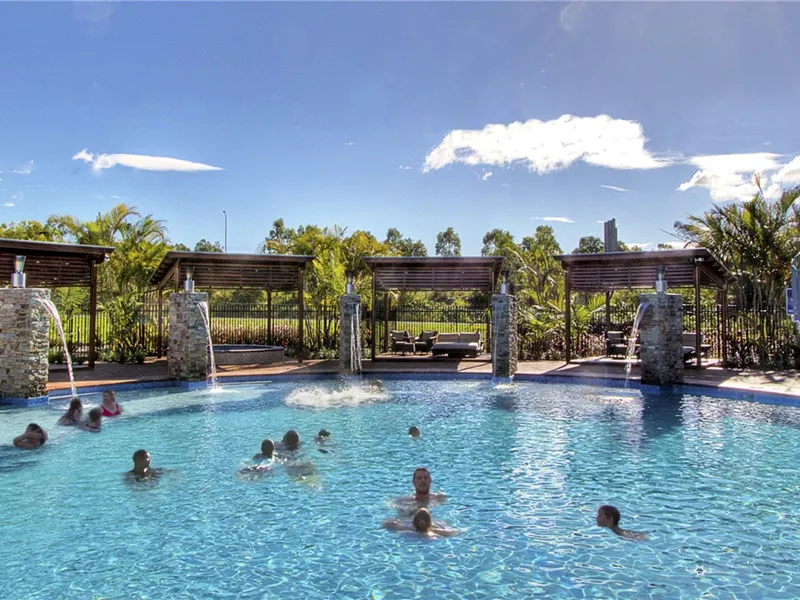
A commercial water park can consume substantial volumes of water, making treatment and circulation an important part of operating economics. Effective pool management does more than maintain clear water for guests. It can reduce unnecessary water replacement, limit equipment stress, and help operators control chemical and maintenance expenses. For developers, the treatment strategy should therefore be considered a long-term operating decision rather than simply a construction requirement.
Why Recirculation Matters to Commercial Operators
Public aquatic facilities need consistent water quality while managing heavy bather loads. The CDC Model Aquatic Health Code states that filtration is required for aquatic venues that recirculate water and provides guidance covering recirculation, filtration, disinfection, pH control, and water replenishment. The guidance is designed around healthy and safe public aquatic environments.
For a water park manufacturer working with developers, hydraulic design and treatment capacity need to be considered alongside attractions and pool layouts. A properly designed circulation loop continuously moves water through treatment equipment instead of relying on frequent complete replacement.
How Pool Water Treatment Saves Fresh Water
One of the clearest economic benefits of pool water treatment is water conservation. Rather than discarding large quantities of pool water simply because impurities accumulate, a properly designed treatment process removes suspended contaminants and returns treated water to circulation. Fresh water is still required for replenishment and operational needs, but unnecessary water changes can be reduced.
Jinchao describes its pool water treatment approach as enabling pool-water recycling, significantly reducing the frequency and amount of water changes. This can also reduce corrosion and scaling in pipelines and treatment equipment, helping extend the service life of pool facilities and related systems.
Filtration also addresses contaminants introduced during daily operation. Hair, dandruff, sediment, and other pollutants can enter the water as guests use pools and aquatic attractions. Effective filtration helps remove these impurities, supporting clear and transparent water and reducing problems associated with greenness and turbidity.
Lower Water, Chemical, and Maintenance Expenses
Water savings are only one part of the financial equation. Every replacement cycle can involve additional water procurement, heating where applicable, treatment, and labor. Reducing unnecessary discharge can therefore lower several connected operating expenses.
Better water quality can also help operators manage equipment more effectively. Jinchao notes that reducing corrosion and scaling can extend the service life of pipelines and water treatment equipment. For commercial operators, longer component life may mean fewer repairs, less downtime, and a lower frequency of replacement work.
Why Flow and Filtration Need to Work Together
A circulation design is effective only when its components are appropriately matched. The CDC’s current MAHC guidance states that flow through different components should be balanced to maximize water clarity and safety. It also requires systems to maintain appropriate disinfectant concentration and pH when flow is reduced during permitted unoccupied periods.
This matters for developers because pumps, filters, chemical dosing, pools, and attractions influence one another. An undersized treatment installation can struggle during peak use, while poorly coordinated flow can reduce treatment performance. A water park manufacturer with integrated planning capabilities can help align these elements during project development.
Splash Pads Need the Same Operational Discipline
Smaller attractions can still create treatment demands. The CDC specifically includes splash pads among public aquatic venues covered by its guidance and recommends daily checks to ensure disinfection, secondary treatment where used, recirculation equipment, and filters are operating. Operators must also maintain appropriate disinfectant and pH levels.
For projects incorporating children’s play areas, a splash pad recirculation system should therefore be planned according to local regulations, hydraulic requirements, bather loading, and the selected treatment technology. Treating smaller water features as an afterthought can create operational complications later.
Selecting a Supplier With Lifecycle Thinking
Business buyers should evaluate treatment suppliers and water park manufacturers according to more than initial equipment price. Design capability, manufacturing quality, engineering coordination, installation support, documentation, and after-sales assistance can influence the total cost of ownership.
Jinchao presents itself as an integrated water park provider, offering master planning, equipment manufacturing, construction support, and global after-sales service. Its official site reports a manufacturing base of approximately 36,000 square meters, more than 300 global water park construction cases, and 15 years of water park design and equipment experience.
A supplier involved early can help project teams consider treatment capacity together with pool dimensions, attraction demand, circulation routes, and maintenance access. That approach can reduce the risk of costly redesigns and make operational assumptions clearer before construction.
Turning Water Efficiency Into Long-Term Value
Water management should be treated as part of the park’s business model. The goal is not simply to use less water, but to maintain suitable water quality while minimizing avoidable consumption and associated operating expenses. This broader approach supports water park operating cost reduction without compromising the operational requirements of public aquatic facilities.
For developers, the most practical strategy is to evaluate filtration, circulation, replenishment, disinfection, and equipment durability as one connected system. Jinchao’s pool water treatment offering emphasizes recycling pool water, removing impurities, reducing corrosion and scaling, and extending equipment service life.
As a water park manufacturer, Jinchao can also connect treatment considerations with wider park planning and equipment requirements. When water management is designed into a project from the beginning, operators can make more informed decisions about resource consumption, maintenance, and lifecycle costs. The result is a water park designed not only for guest appeal, but also for more disciplined long-term operation.
