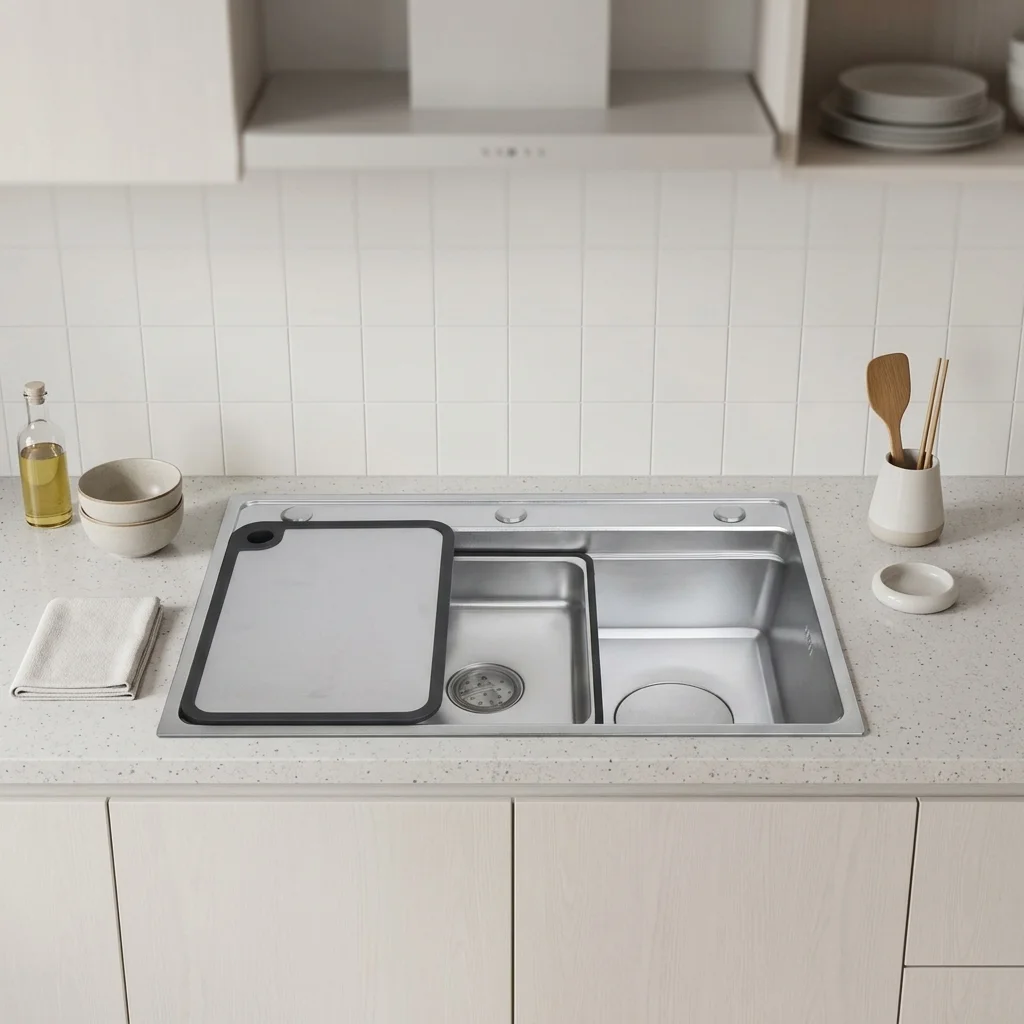
Choosing a top mount kitchen sink involves more than selecting a basin that matches the kitchen design. For countertop fabricators, cabinet manufacturers, property developers, and kitchen equipment distributors, the installation method affects cutout planning, edge protection, maintenance, and project costs. A top-mount sink rests on the countertop, with its rim covering the edge of the opening. This arrangement can work with several countertop materials, provided the substrate, dimensions, and installation method are compatible.
Why Countertop Material Changes the Installation Process
The visible rim is a defining feature of top-mount installation. Unlike an undermount model, which attaches beneath the work surface, a top-mount sink is lowered into a prepared opening and supported around its perimeter according to the manufacturer’s instructions. The rim helps cover the cut edge, although the quality of the seal and the support beneath the sink remain important.
For project teams, countertop selection should happen alongside sink specification rather than after cabinetry drawings are complete. The material influences how the opening can be cut, how exposed edges should be protected, and what maintenance the finished installation will require. Accurate measurements and a coordinated installation drawing help reduce modifications on-site.
Laminate Countertops: Protecting the Cut Edge
Laminate countertops are commonly used in residential developments and renovation projects where budget control and a wide choice of finishes are important. A top-mount sink can be a practical option because its rim covers the cutout edge, reducing the amount of exposed substrate around the basin.
However, the covered edge still needs suitable sealing. Water entering the particleboard or other substrate beneath a laminate surface can cause swelling or deterioration. Installers should follow the countertop manufacturer’s recommendations for sealing the opening and ensure the sink sits evenly against the worktop.
Procurement teams should also verify the rim dimensions and cutout template before fabrication. A sink selected late in the process may require changes to the opening or interfere with nearby fixtures. Coordinating these details early helps contractors maintain installation schedules and control rework.
Quartz and Natural Stone: Accuracy Matters
Quartz surfaces and natural stone offer different visual and structural characteristics, but both require careful cutout planning. Engineered quartz typically contains mineral aggregates bound with resin, while natural stone varies according to its composition and structure. Cutting methods and support requirements should therefore follow the guidance of the countertop fabricator.
A top-mount rim can cover the cut edge and create a defined boundary between the basin and the work surface. Nevertheless, the countertop must provide adequate support around the opening, and the cutout should not leave narrow or vulnerable sections that are prone to damage. Stone surfaces can chip or crack if handled improperly during fabrication or installation.
Buyers should confirm the sink’s external dimensions, corner geometry, rim coverage, and mounting instructions before the stone is cut. The chosen sealant must also be suitable for both materials. These checks are particularly relevant to multi-unit projects, where inconsistent cutouts can lead to delays and additional fabrication costs.
Solid-Surface and Other Worktop Options
Solid-surface countertops allow a range of shapes and integrated design details. A top-mount sink can provide contrast between the basin and surrounding worktop, making it suitable for projects where a clearly defined sink area is part of the design.
Compatibility still depends on the material manufacturer’s installation guidance. Teams should confirm the recommended cutout method, support arrangements, and sealant requirements rather than assuming every solid-surface product can be treated identically. Timber worktops require particular attention to moisture protection around exposed edges, even when the sink rim covers the opening.
When comparing kitchen sinks top mount stainless steel, buyers should assess the basin and countertop as one installation system. Stainless steel offers a relatively lightweight alternative to some heavier basin materials, but the final load and support requirements depend on the complete product and installation.
A Product Example for B2B Specification
AOGLAN’s DGN-D multifunctional sink provides a reference point for this type of evaluation. This sink is made of 304 stainless steel, featuring a 4mm + 0.8mm sink thickness, ensuring stable load-bearing capacity. It’s available in two sizes: 680×460×230 mm and 750×460×230 mm, and support flexible top-mount installation. The surface is coated with volcanic texture silver diamond nano or volcanic black diamond technology, effectively meeting the frequent kitchen usage requirements.
The product also has an extra-large circular drain and a splash-guard design on the work surface. Buyers should confirm the selected size, finish, accessory package, and interpretation of the thickness notation with the supplier before finalizing technical documents.
For B2B customers, product compatibility is only one part of supplier evaluation. AOLGAN has a professional R&D design team and a strong production capacity. Their design team has 5 to 11 years of industry experience and they can develop customized products according to your requirements. Project buyers should confirm current production availability, quality inspection arrangements, and order-specific lead times before committing to a schedule.
Coordinating Design, Fabrication, and Supply
A successful top-mount installation depends on matching the sink specification to the countertop material and the actual conditions on-site. Confirming cutout dimensions, sealing methods, rim coverage, and support requirements before fabrication helps reduce avoidable installation issues.
For distributors, contractors, and kitchen project buyers, AOGLAN offers stainless steel sink products and customization services. Sharing the countertop type, required dimensions, finish preferences, order quantity, and delivery schedule helps the supplier assess the project requirements and clarify the appropriate product configuration.
