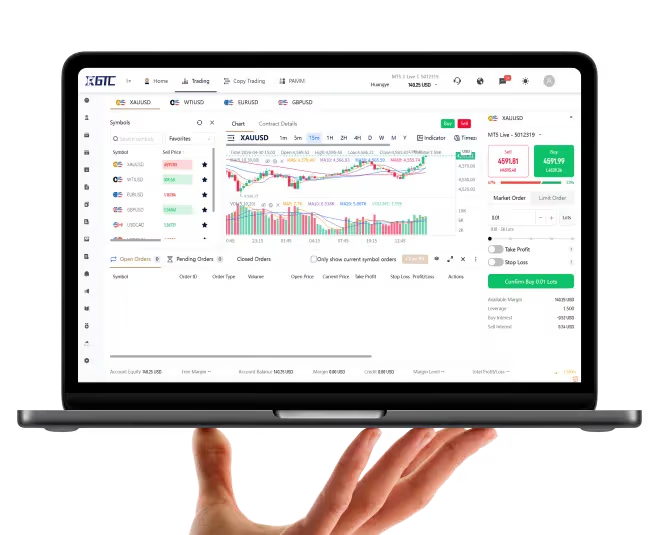
Trading Contracts for Difference (CFDs) has become a popular way for traders to access global markets without owning the underlying assets. However, before opening an account with a CFD broker, many traders want to understand the real costs involved. Spreads, commissions, overnight fees, and other charges can all affect trading results.
Choosing an online CFD broker requires more than looking at promotional offers. Traders need to evaluate pricing structures, platform conditions, execution quality, and account features to understand the overall trading experience.
What Are the Main Costs of CFD Trading?
CFD trading allows investors to speculate on the price movements of financial instruments such as forex, indices, commodities, metals, shares, and other markets without directly owning the assets. While this provides flexibility, traders should consider several types of costs before entering positions.
The most common cost is the spread. The spread represents the difference between the buying price and selling price of a CFD instrument. A narrower spread generally means lower transaction costs, especially for traders who open and close positions frequently.
For example, active traders who execute multiple trades each day may find that even small differences in spreads can have a significant impact over time. Therefore, comparing spread conditions is an important step when selecting a CFD broker.
Understanding Spreads and Commissions
Different CFD brokers use different pricing models. Some accounts include spreads without additional commissions, while others offer tighter spreads with a separate commission charge.
A standard account may be suitable for traders who prefer a simpler fee structure, while professional or high volume traders may consider accounts with lower spreads and transparent commissions.
GTCFX provides different account options designed to meet different trading needs. Its Standard account offers spreads from 1.0 pips with no commission, while its ECN account provides access to spreads from 0.0 pips with a commission-based structure.
When comparing an online CFD broker, traders should calculate the total cost per trade rather than focusing only on one fee. A broker with lower spreads may not always have the lowest overall cost if additional charges apply.
The Impact of Overnight Financing Fees
Another important cost in CFD trading is the overnight financing fee, also known as a swap fee. This cost applies when traders keep leveraged positions open beyond the daily trading session.
The amount depends on factors such as the trading instrument, position size, interest rates, and the broker’s financing conditions. Short-term traders may be less affected by overnight fees, but long-term CFD positions require careful cost planning.
Before opening a position, traders should check the broker’s financing terms and understand how holding costs may influence potential returns.
How Leverage Affects Trading Costs
Leverage is one of the key features of CFD trading because it allows traders to control larger positions with a smaller amount of capital. However, leverage does not remove trading costs. Instead, it can increase both potential gains and potential losses.
For example, a trader using higher leverage may open a larger position, which means the impact of spreads, commissions, and financing costs can also become greater.
A responsible online CFD broker should provide clear information about leverage and margin requirements. GTCFX explains that leverage allows traders to control larger positions with less capital, while also highlighting that increased leverage can increase risk exposure.
Additional Factors That Influence Trading Expenses
Besides direct trading fees, traders should also consider other factors that influence the overall cost of using a CFD platform.
Execution speed can affect trading results, especially in fast moving markets. Delayed execution may create differences between expected and actual entry or exit prices. GTCFX highlights its trading environment with fast execution and access to multiple global markets, including forex, metals, energy, indices, shares, crypto CFDs, and futures CFDs.
Platform stability is another consideration. A reliable trading platform helps traders manage positions effectively and access market information when needed. Many traders use platforms such as MetaTrader 4 and MetaTrader 5 because of their analytical tools and trading functionality. GTCFX supports both MT4 and MT5 platforms across its account options.
Choosing the Right Online CFD Broker
When selecting an online CFD broker, traders should evaluate several aspects together rather than choosing based only on low fees.
A suitable broker should provide transparent pricing, competitive trading conditions, reliable technology, and clear risk information. Traders should also consider whether the available instruments match their trading strategies.
GTCFX offers access to various CFD markets and provides account types designed for different trading styles. Its platform supports multiple instruments and trading solutions, allowing traders to select conditions that align with their experience and objectives.
Managing CFD Trading Costs More Effectively
Understanding costs is an essential part of building a trading plan. Traders can manage expenses by selecting appropriate account types, avoiding unnecessary overtrading, monitoring overnight fees, and considering the relationship between position size and transaction costs.
A lower cost structure does not guarantee better trading results. Successful CFD trading also depends on risk management, market analysis, and disciplined decision making.
Evaluating CFD Trading Costs
Understanding the costs of trading CFDs online helps traders make more informed decisions when choosing a CFD broker. Spreads, commissions, financing fees, leverage, and execution conditions all contribute to the total trading experience.
An online CFD broker such as GTCFX provides different account structures and access to multiple markets, allowing traders to evaluate trading conditions based on their individual needs.
Before starting CFD trading, investors should carefully review all associated costs, understand the risks of leveraged products, and choose a platform that offers transparent conditions and suitable tools for their trading approach.
