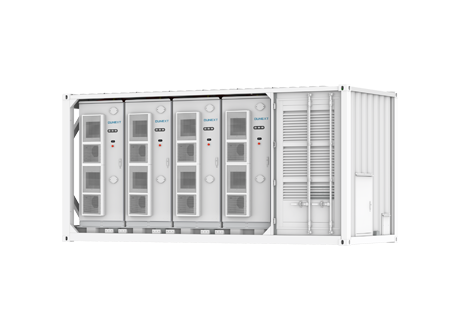
Balancing intermittent generation profiles with fluctuating demand loads poses continuous technical challenges for modern power networks. Grid operators integrate flexible utility scale energy storage infrastructure to stabilize voltage frequency and absorb sudden supply surges. Systemic energy buffering converts variable renewable power into steady, dispatchable electricity suitable for primary distribution lines. Established integrators such as Dunext design modular hardware topologies that interface directly with high-voltage substations.
Continuous dynamic dispatch allows utilities to maintain grid equilibrium without relying exclusively on traditional fossil-fuel peaking plants. Mitigating ramp-rate volatility protects sensitive grid components from electrical strain during periods of rapid solar or wind generation shifts.
Proper electrical integration establishes a predictable baseline for regional power distribution. High-capacity system buffering remains fundamental to maintaining grid resilience across modern transmission networks.
Global Deployment Experience and Project Scale Metrics
Proving execution reliability across diverse international jurisdictions requires extensive field experience under varying grid compliance standards. Navigating over 100 successful projects across more than 20 countries demonstrates an ability to adapt system architectures to regional electrical codes. Managing more than 3 GWh of projects in operation worldwide validates structural design, thermal performance, and commissioning protocols.
Utility planners evaluating utility scale battery storage companies examine global operational track records to gauge long-term system durability. Operating across diverse markets provides field experience that can help validate system performance under different environmental and grid conditions. Historical uptime logs provide concrete evidence of long-term economic performance.
Field validation across diverse international markets mitigates commissioning risks for project developers. Verified field metrics offer financiers confidence during underwriting processes for high-capacity energy projects.
Thermal Regulation Mechanics in High-Density Storage Enclosures
Sustained high-current charge and discharge routines generate intense heat inside dense battery cabinets. Liquid cooling configurations circulate temperature-controlled fluid across module cold plates, keeping internal cell variations within narrow limits. Eliminating internal thermal gradients extends overall cell lifecycles and preserves usable energy capacity.
Leading utility scale battery storage companies prioritize fluid circulation efficiency to lower internal operational stress. Utilizing containerized units such as the PowerMount 5MWh platform optimizes fluid distribution, keeping cell temperature variations tightly controlled. Closed-loop liquid cooling reduces auxiliary power demand compared to traditional forced-air ventilation.
Precision thermal control protects chemical battery health over thousands of operational cycles. Reduced auxiliary energy draw directly enhances net round-trip energy efficiency for site owners.
Layered Protection Architectures and Rapid Hazard Containment
Deploying mega-watt class battery assets requires multi-tiered safety systems to safeguard physical infrastructure and operating personnel. Advanced off-gas monitoring networks detect microscopic chemical venting early, initiating automated shutdown protocols long before thermal escalation occurs. Physical barrier separation between internal module racks prevents localized overheating from spreading across adjacent strings.
Modern utility scale energy storage installations combine localized aerosol suppression units with automated physical isolation valves. Sub-20-millisecond switchover speeds support rapid response to utility interruptions and voltage disturbances. Isolated sub-system topologies allow site managers to perform targeted repairs without taking entire facility assets offline.
Physical containment shields surrounding substation infrastructure from cascading thermal propagation. Layered safety engineering establishes clear risk mitigation protocols for facility operators.
Digital Telemetry, EMS Architecture, and Software Coordination
Internal Energy Management Systems (EMS) serve as the digital control hub for grid-connected battery infrastructure. Real-time telemetry monitors cell voltages, state-of-charge parameters, and internal resistance across active module racks. Local control algorithms execute rapid dispatch commands to align battery discharge routines with dynamic wholesale pricing signals.
Engineering teams analyze utility scale battery storage companies based on software response latency and diagnostic depth. Remote cloud platforms process operational telemetry to forecast maintenance requirements before hardware failures occur. Visualized software dashboards give site operators clear visibility across distributed multi-megawatt battery portfolios.
Automated software controls maximize financial productivity through primary frequency response and energy arbitrage. Universal communication compatibility prevents software lock-in, simplifying long-term system management.
Enclosure Resilience and Environmental Defense Standards
Utility battery hardware installed in outdoor environments must withstand severe weathering, ranging from coastal salt spray to arid desert dust. Protective housing featuring IP67 ingress protection seals internal power conversion components against moisture intrusion and fine particulate contamination. Exterior cabinet surfaces receive specialized C5 anti-corrosion coatings to resist casing deterioration over multi-decade lifecycles.
Modular units like the PowerHill 233kWh cabinet incorporate auto-coolant replenishment circuits alongside sealed electrical compartments. Weatherproof housing protects high-voltage junction boxes and power conversion electronics from atmospheric condensation. Heavy-gauge steel framing maintains structural integrity during extreme wind events and seismic activity.
Durable enclosure engineering lowers balance-of-system maintenance costs over extended operational lifecycles. High protective ratings preserve operational availability in challenging remote regions.
Capital Efficiency and Lifetime Revenue Stacking
Evaluating utility-scale battery investments involves analyzing total cost of ownership alongside upfront hardware expenditure. Strategic degradation management preserves useful storage capacity across thousands of charge-discharge cycles, maintaining steady revenue streams. High system availability ensures uninterrupted participation in competitive wholesale power markets.
Deploying flexible utility scale energy storage hardware allows project developers to stack multiple value streams seamlessly. Facilities simultaneously execute peak shaving, spinning reserve support, and voltage regulation. Diversified operational revenue streams shorten capital recovery timelines for institutional project financiers.
Predictable capacity retention shields asset owners from unexpected replacement costs. Long-term operational reliability builds a resilient financial model for energy infrastructure projects.
Systemic Foundations for Decarbonized Grid Infrastructure
Modernizing utility power networks requires selecting equipment integrators committed to engineering precision, safety design, and long-term service support. Utility decision-makers prioritize partners capable of combining high-density hardware with intelligent control software and field-tested execution capabilities. Deploying resilient storage infrastructure supports transition goals toward low-carbon distribution networks globally.
Technology providers like Dunext demonstrate how global execution experience, advanced thermal management, and robust safety protocols drive successful grid modernization initiatives. Evaluating detailed physical specs, protective enclosure ratings, and operational track records assists developers in building dependable utility assets. Investing in build quality protects critical energy infrastructure for decades of field operation.
