Nitrogen oxides, commonly grouped as NOx, are reactive gases generated by high-temperature combustion and industrial processes. The group includes nitric oxide (NO) and nitrogen dioxide (NO₂), among other oxidized nitrogen compounds. NO₂ deserves particular attention because exposure can affect the respiratory system.
For facilities using boilers, furnaces, engines, burners, chemical processes, or other high-temperature equipment, NOx monitoring should be part of a structured industrial hygiene program. A reliable Gas Detector can help identify changing atmospheric conditions.
Why NOx Requires Careful Industrial Monitoring
NO and NO₂ do not present identical hazards, so a monitoring plan should define which gases may be generated. EPA describes nitrogen oxides as a group of highly reactive gases and identifies NO₂ as the indicator used for national ambient air quality standards. Short-term NO₂ exposure has been associated with adverse respiratory effects.
NO₂ can be important around combustion equipment. It may form from emissions involving engines, power generation, industrial combustion, and other processes. Workers can encounter elevated concentrations during equipment operation, maintenance, confined-area work, or abnormal releases.
OSHA’s current Table Z-1 lists a 5 ppm ceiling permissible exposure limit for nitrogen dioxide. Its chemical data page also lists a 1 ppm short-term NIOSH REL and an IDLH value of 13 ppm. These figures show why monitoring needs to respond to relatively low concentrations.
Where NOx Hazards Can Develop
Industrial NOx risks can occur wherever nitrogen-containing fuels or materials undergo combustion or high-temperature reactions. Diesel equipment, furnaces, boilers, generators, kilns, and process heaters are examples of areas that may require assessment.
Confined or poorly ventilated spaces deserve special attention. Exhaust gases can accumulate when air movement is insufficient, while maintenance activities may place workers closer to emission sources. A risk assessment should consider routine conditions.
Monitoring points should reflect the actual process. Consider emission sources, worker locations, ventilation patterns, access routes, and areas where gas could accumulate. Personal monitoring may also be appropriate when employees move between work areas or perform inspections.
Choosing a Gas Detector for NOx Applications
The first selection criterion is sensor compatibility. A Gas Detector should be specifically configured for the target gas because a general-purpose instrument cannot automatically be assumed to measure every component of NOx. Confirm whether the required sensor is for NO, NO₂, or another specified gas and verify its measuring range and alarm settings.
Bosean’s portable gas detector product range includes single-gas and multi-gas instruments. Its catalog also separates portable detectors into categories such as single-gas, multi-gas, marine, gas-leak, mining-use, and laser methane detectors.
For NOx applications, portability can help workers inspect combustion equipment, investigate suspected emissions, or carry out maintenance. However, the exact detector configuration should be confirmed with the manufacturer. Check supported gases, sensor technology, measurement range, operating temperature, protection rating, and application-specific specifications.
Portable and Fixed Monitoring Can Work Together
Portable monitoring is valuable for personal checks and mobile inspections, but some facilities may also need continuous fixed monitoring. The appropriate approach depends on the risk assessment, process layout, release scenarios, and need for continuous area-level warning.
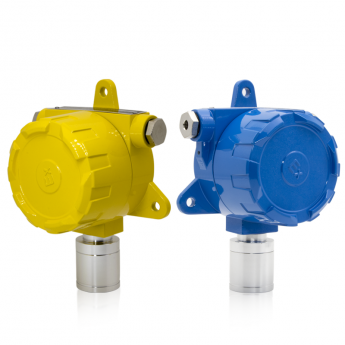
Bosean’s BH-60 fixed gas detector lists NO, NO₂, and NOx among its detectable gases. Its published specifications include catalytic, electrochemical, PID, or infrared detection principles depending on the gas, a response time of no more than 30 seconds, and an Ex db IIC T6 Gb explosion-proof rating. These specifications apply to the BH-60 model.
Combining fixed and portable instruments can provide complementary coverage. Fixed devices can continuously monitor selected locations, while portable units can accompany personnel during inspections.
Calibration, Alarms, and Maintenance Matter
Detection equipment is useful only when maintained and operated correctly. Calibration, functional checks where applicable, sensor condition, battery status, alarm operation, and inspection records should be incorporated into the site’s gas-monitoring procedure.
Alarm thresholds should be established using applicable regulations, occupational exposure limits, process requirements, and the detector manufacturer’s specifications. Because NOx can involve different gases with different exposure criteria, alarm values should not be copied from another application without technical review.
Bosean advises users to read the relevant instruction manual before operating its products and provides after-sales support. Maintenance should follow the specific detector’s documentation, including calibration intervals, sensor replacement, and environmental limitations.
Build NOx Monitoring Into Industrial Risk Control
A detector should not replace ventilation, enclosure, process controls, preventive maintenance, or worker training. Instead, monitoring provides information that can help verify atmospheric conditions and warn personnel when concentrations reach defined limits.
A NOx control program begins with identifying sources, evaluating exposure scenarios, selecting suitable sensors, defining monitoring locations, setting alarms, and establishing response procedures. Workers should understand what an alarm means and what actions are required under the site’s emergency plan.
When selecting equipment, procurement teams should provide detailed application information. Gas type, expected concentration, temperature, humidity, installation or carrying method, alarm functions, and hazardous-area requirements can all affect the appropriate configuration.
Company Introduction
Bosean was founded in 2013 and specializes in gas detection and measurement instruments. Its portfolio covers portable and fixed gas detectors, gas alarms, nuclear radiation detectors, air quality monitors, and other equipment. The company reports more than 80 R&D engineers, over 300 patents and software certificates, and customers in more than 130 countries and regions.
The portable gas detector range can be a starting point for comparing mobile monitoring options. To determine whether a configuration fits an NOx application, “Contact Us” with the target gas and operating conditions so specifications can be reviewed before deployment.
