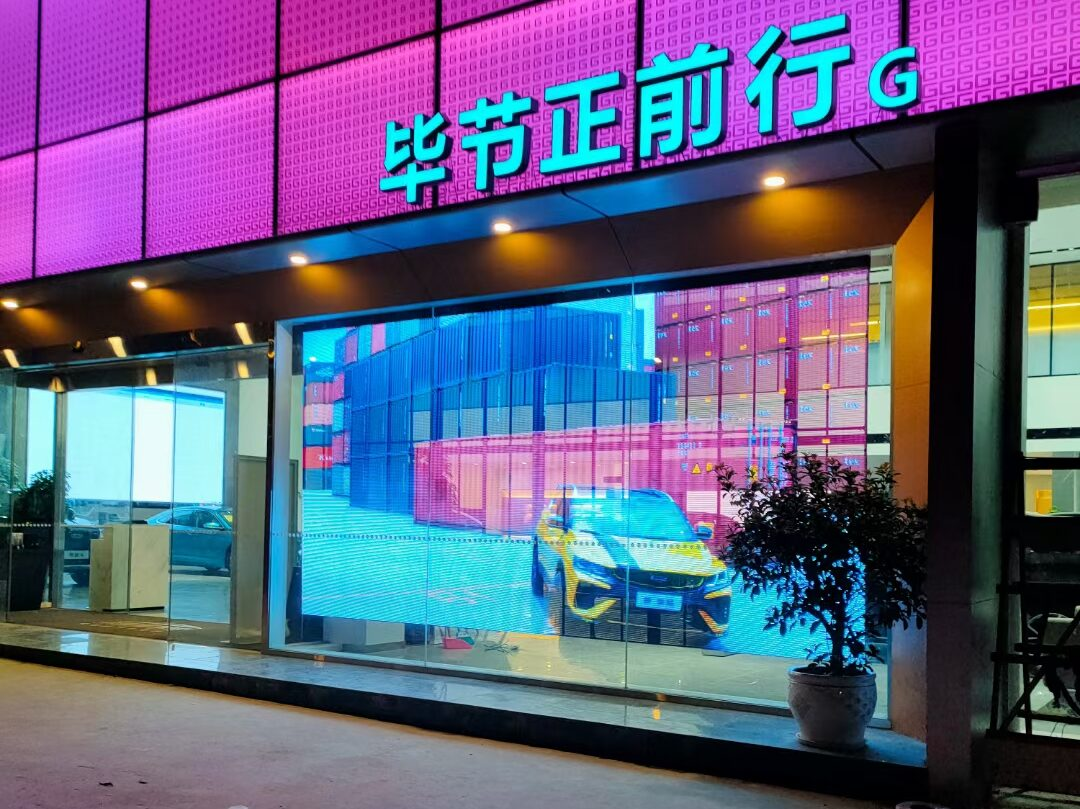
Transparent-display pricing is difficult to reduce to a single number because the product is configured around both visual performance and the building surface that receives it. Pixel pitch, transparency, brightness, cabinet weight, mounting method, customized sizing, maintenance access, expected life, power consumption, and structural work can all change the engineering scope.
As a result, an LED transparent screen is normally more useful to evaluate through a quotation tied to a defined project than through a generic price-per-unit comparison. Buyers gain a clearer view of value when they separate the variables that affect the display itself from those that affect installation, operation, and long-term ownership.
Why a Single Published Price Can Be Misleading
Transparent products differ in construction and pixel arrangement. Within the B-series window screens, the CC2.6-5.2 has a horizontal pixel pitch of approximately 2.604 mm, compared with 15.625 mm for the CC15-15. These configurations also differ in pixel density, viewing distance, transparency, and average power consumption.
An LED transparent screen with a finer pitch does not represent the same engineering requirement as a more open configuration intended for greater viewing distance. The quantity and arrangement of display elements change, while the desired transparency may pull the design in another direction.
A quotation therefore needs to start with screen dimensions, viewing conditions, required visual density, and the amount of glass that should remain visually open. Comparing prices without aligning those variables can make two fundamentally different solutions appear directly interchangeable when they are not.
A useful quotation request therefore defines the same screen area, viewing requirement, installation surface, transparency objective, and service expectation for every supplier or configuration being compared. Without that common project brief, a lower figure may simply describe a less demanding configuration rather than a genuinely lower-cost route to the same result.
Weight and Installation Method Affect More Than the Product Cost
Transparent displays interact with existing architecture, so the physical installation method becomes part of the value calculation. The curtain-wall series in HDC‘s supplied range uses approximately 65%-75% permeability depending on model, brightness of at least 5000 cd/m², and cabinet weights around 10-13 kg for the 1 m² formats shown.
The TM3.9-7.8 and TM10 adhesive-film models weigh 6 ± 0.5 kg and 5 ± 0.5 kg per 0.5 m²cabinet, respectively. Their direct-glass mounting offers another installation approach. For an LED transparent screen, weight comparisons need the same area basis. Supporting structure, attachment method, installation access, and alterations around the glazing also affect the project scope.
A lighter or directly mounted solution is not automatically cheaper in every project, but the installation path should be included in the quotation analysis because structural work can represent a meaningful part of the overall scope.
Transparency, Brightness, and Power Form a Three-Way Value Question
Buyers often want high transparency and strong image visibility at the same time, yet the useful balance depends on the site. HDC’s TM3.9-7.8 and TM10 adhesive-film models provide transparency of at least 55% and 68%, respectively. Their corresponding brightness specifications are at least 4000 and 5000 cd/m², and both have refresh rates of at least 3840 Hz.
Curtain-wall products are listed at roughly 65%-75% permeability with at least 5000 cd/m² brightness. These figures show that an LED transparent screen should be valued by how well its transparency and luminance fit the glazing environment, not by maximizing either figure without context. Power consumption also belongs in the assessment because the window-product range varies in that parameter.
A buyer comparing quotations should therefore ask whether the proposed configuration delivers the required visibility and openness at an operating level appropriate to the project, rather than paying for a specification that the site does not need.
The same comparison should record which assumptions are included in each proposal so that differences in mounting, customization, or service access are not mistaken for simple product-price differences.
Maintenance, Expected Life, and Structural Work Shape Long-Term Value
Initial purchase price is only one part of the decision. Maintenance access affects how the screen can be serviced after installation, customized sizing can alter manufacturing and installation complexity, and the amount of structural work influences project labor before the display is even commissioned.
The supplied curtain-wall information lists a typical life of 100,000 hours, providing one measurable long-term reference within the range. For an LED transparent screen, expected life should be considered together with serviceability and the physical effort required to keep the installation operating.
A lower quotation can lose its advantage if the design creates difficult access or requires extensive structural intervention, while a higher-priced configuration is not automatically better unless its additional cost corresponds to a real project benefit.
Value becomes clearer when every quotation is normalized around the same project definition. That normalization turns price review into a technical comparison instead of a search for the smallest headline number.
Buyers can compare pixel pitch, transparency, brightness, weight, mounting method, customized dimensions, maintenance access, power use, expected life, and required structural work rather than comparing headline prices alone.
HDC’s transparent product range illustrates why these variables differ among window, curtain-wall, and adhesive-film constructions. The most defensible LED transparent screen purchase is the one whose quoted configuration meets the visual and architectural requirements without adding specifications or installation complexity that the project cannot use.
