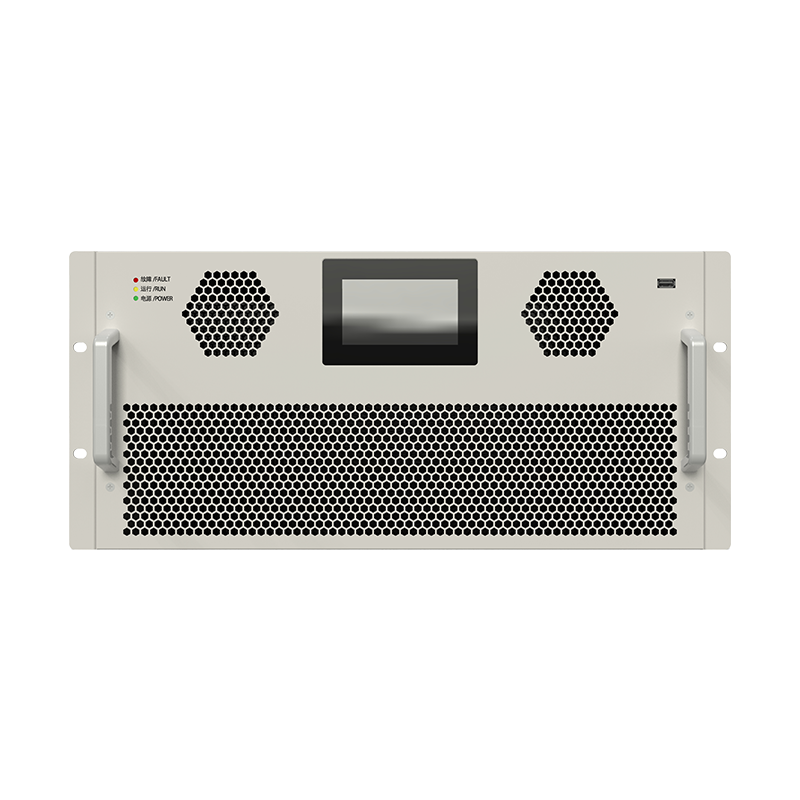
Industrial electrical networks containing non-linear loads like variable frequency drives, rectifiers, and arc furnaces generate continuous harmonic currents that distort line voltage waveforms. Calculating total harmonic current distortion across primary distribution buses enables plant engineers to determine whether active filters for power quality improvement are required to protect downstream sensitive automation equipment. Systemic power quality audits provide the empirical baseline needed to prevent severe equipment overheating, insulation breakdown, and erratic circuit breaker tripping.
Focusing on steady-state power electronics, Enjoypowers produces reliable power conversion modules designed for harsh industrial environments. Driven by a team of 110 R&D engineers operating across 16,000 square meters of manufacturing space, the company delivers custom hardware designs, verified equipment stability, self-developed control platforms, and prompt technical support. Plant operators and facility managers are encouraged to submit project details to receive tailored engineering reviews and customized equipment proposals.
Evaluating Site Electrical Parameters for Accurate Filter Sizing
Determining correct active harmonic filter capacity requires measuring fundamental load currents along with individual harmonic order amplitudes up to the 50th harmonic. Sizing models evaluate total harmonic current distortion percentage alongside total rms load current to calculate required compensation current in amperes.
Inaccurate site measurements often result in under-sized active filter installations that operate under continuous current limiting, reducing overall compensation effectiveness. Over-sizing hardware increases initial capital expenditure without providing proportional power quality benefits across standard operating cycles.
Harmonic Current Spectrum Calculation Methods for Industrial Loads
Engineers analyze non-linear load profiles using digital power quality analyzers to capture dynamic load variations across full operational shifts. Assessing current spectrum data identifies dominant odd-order harmonics, such as the 5th, 7th, 11th, and 13th orders commonly generated by six-pulse bridge rectifiers.
Partnering with an experienced active harmonic filter supplier simplifies harmonic spectrum modeling for multi-drive industrial installations. Technical specialists apply specialized software simulations to predict dynamic current injection needs under varying production conditions.
Analyzing Operational Trade-Offs Between IGBT and SiC Switching Platforms
Selecting appropriate semiconductor switching topologies depends on dynamic response speed requirements and project cost constraints. Insulated Gate Bipolar Transistor (IGBT) platforms provide a practical, cost-effective choice for steady-state industrial harmonic problems where moderate switching speeds satisfy grid code compliance.
Deploying the SinE Standard Series active filter platform offers a field-proven IGBT-based architecture with a 10 ms response time, providing a cost reduction of 30% to 40% compared to silicon carbide alternatives. Selecting IGBT-based active filtering balances operational capability with economical capital investment for conventional manufacturing plants.
Sizing Active Harmonic Filters for Variable Spectrum Loading
Industrial facilities operating variable speed drive fleets experience dynamic harmonic spectrum shifts as production loads increase or decrease. Sizing active compensation hardware requires calculating maximum peak harmonic current demand rather than relying solely on average load figures.
Selecting hardware built by Enjoypowers allows facility planners to combine modular power units that scale compensation capacity incrementally. Modular sizing flexibility supports prospective plant expansions without necessitating complete switchgear overhauls.
Accounting for Grid Voltage Variations and Multi-Voltage Deployments
Industrial facility distribution systems span multiple nominal AC voltage levels depending on regional utility standards and plant transformer configurations. Active conditioning hardware must operate reliably across diverse line voltages, ranging from low-voltage 200 Vac systems up to 800 Vac heavy industrial buses.
Working alongside a flexible active harmonic filter supplier allows project developers select the SinE Standard Series, which is available across five voltage classes (200/400/480/690/800 Vac). Broad voltage compatibility simplifies procurement and spare part management across multi-site industrial portfolios.
Dynamic Response Times and Compensation Capacities in Steady-State Systems
In steady-state industrial manufacturing, power load variations occur over seconds rather than microseconds, making rapid sub-millisecond response times unnecessary for basic harmonic suppression. Utilizing the SinE Standard Series active filter platform delivers consistent 10 ms response times that effectively mitigate steady-state harmonic pollution across 32 standardized SKUs.
Extensive field deployment history exceeding 22 GW across global industrial sites demonstrates long-term structural reliability. Steady-state compensation stabilizes site power factors while protecting distribution transformers from excessive thermal stress.
Modular Hardware Architectures and Maintenance Serviceability
Plant maintenance managers prioritize modular power quality hardware designed for straightforward field servicing and low operational downtime. Modular card designs allow technicians to inspect and replace control cards or power modules quickly during scheduled maintenance windows.
Selecting active filters for power quality improvement with accessible spare parts lowers long-term operational costs across multi-year lifespans. Standardized sub-assemblies streamline ongoing maintenance routines for facility engineering teams.
Integrating Active Conditioning Equipment into Existing Switchgear
Retrofitting active harmonic filtering hardware into existing switchgear rooms requires evaluating physical space limitations, thermal airflow requirements, and current transformer placement. Connecting current transformers at main incoming buses or individual load branches determines whether the filter operates in closed-loop or open-loop compensation modes.
Collaborating with a dedicated active harmonic filter supplier helps system integrators verify current transformer polarity and communication wiring prior to system commissioning. Proper mechanical and electrical installation prevents control loop instability during initial startup.
Conclusion
Sizing active harmonic filters requires careful evaluation of harmonic spectra, line voltage ranges, switching semiconductor topologies, and serviceability requirements. Enjoypowers delivers industrial-grade power conditioning hardware backed by proprietary R&D, tailored customization capabilities, verified product stability, and worldwide technical support. Engineering procurement teams, plant managers, and facility integrators are invited to contact technical specialists to obtain detailed product documentation and request custom sizing assessments.
