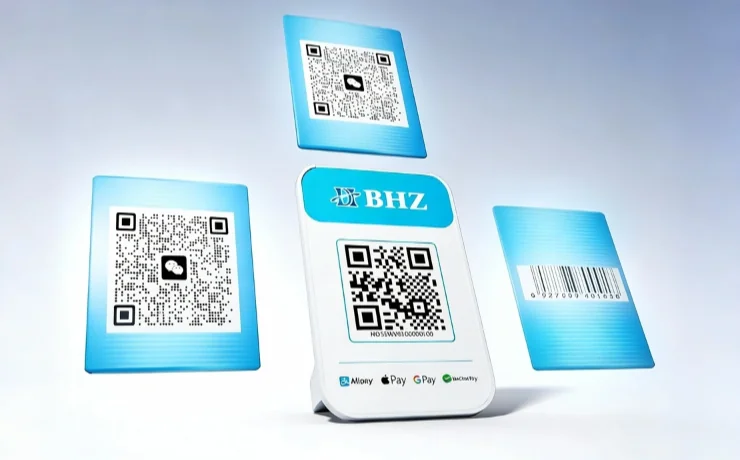
For banks, payment service providers (PSPs), and merchant service providers, rolling out payment soundboxes across a merchant network involves more than choosing a device that announces incoming payments. Each unit should work with the payment service, suit the merchant’s daily operations, and fit the provider’s deployment and support processes. A configuration suitable for a neighborhood shop may not meet the needs of a busy restaurant or a program covering thousands of merchants across different regions.
Procurement teams should define the purpose and scale of the rollout before comparing devices. Some programs prioritize reliable voice payment alerts for existing QR‑payment workflows. Others need cellular connectivity, visual transaction feedback, or dynamic QR generation. Establishing these requirements helps banks and PSPs select suitable hardware, control deployment costs, and avoid paying for functions that merchants do not need.
The Requirements Behind a Large-Scale Rollout
High-Reliability payment confirmation is the first consideration. When a customer scans a QR code and completes a transaction, the merchant needs a clear indication of the payment result. A voice announcement lets staff continue serving customers instead of repeatedly checking a phone or payment application. Buyers should verify that the proposed device receives transaction notifications from the intended payment platform and communicates the result clearly.
Network access is equally important. Merchant locations vary: some have dependable Wi-Fi, while others operate outdoors or in places where a fixed internet connection is impractical. Cellular connectivity can make deployment more flexible, particularly when devices are distributed across multiple regions. Procurement teams should check supported network types, SIM arrangements, local coverage, and the configuration required before activation.
Merchant-device binding is another requirement for organized deployment. Each unit needs to be associated with the correct merchant or account so that transaction notifications reach the intended business. Buyers should establish how devices are registered, assigned, reassigned, and replaced. These procedures become especially important when merchants change locations or equipment needs servicing.
Finally, large fleets require an effective approach to device administration. Depending on the solution, teams may need to group devices, monitor their status, update software or voice packages, and manage merchant assignments remotely. These functions should be confirmed as part of the proposed hardware and management solution rather than assumed to be available on every model.
Selecting Features That Match the Payment Model
The right QR payment soundbox depends on how merchants accept payments and what confirmation they need. A business that already displays a static QR code may only require clear audio notifications. A merchant that needs to enter a transaction amount and generate a unique QR code for each sale has different requirements. Buyers should distinguish between notification-only devices and models designed for more interactive payment workflows.
Connectivity options also affect product selection. A soundbox with 4G and Wi-Fi can accommodate different network environments, but procurement teams should determine how each connection will be configured and whether switching between supported networks is available on the selected model. These details matter when thousands of devices should operate consistently across varied locations.
BHZ’s product range illustrates how models can serve different requirements. The HD56 QR Payment Soundbox combines voice announcements with a display, allowing merchants to hear and visually check payment information. It supports 4G and Wi-Fi connectivity and has a built-in battery for portable use. The HDP5 Dynamic QR Payment Soundbox adds a keypad and a 2.4-inch display for entering amounts and generating transaction-specific QR codes. These features make it important to match the model to the payment workflow instead of treating soundboxes as interchangeable. For specific model availability and configuration details, buyers can consult BHZ directly.
Audio performance deserves practical testing as well. A device used at a quiet retail counter may perform differently in a crowded food stall or a noisy market. Buyers should consider announcement clarity, volume adjustment, display readability where applicable, battery needs, and ease of operation. The goal is to give merchants dependable confirmation without adding unnecessary steps to checkout.
Different Requirements for Retail, Restaurants, and Small Merchants
Retail stores typically handle repeated transactions at a fixed counter. Staff need to recognize successful payments quickly while scanning products, packing purchases, or assisting the next customer. A compact soundbox with clear voice alerts may be sufficient for merchants using existing QR codes. Where checkout traffic is high, a visible amount display can provide another way to verify transaction details.
Restaurants and food-service businesses often work in noisier, more demanding environments. Employees may take orders, prepare food, and receive payments in different areas. Strong audio output can help staff hear alerts during busy periods, while a display may provide a useful visual reference. Some restaurants may also benefit from dynamic QR generation when transaction amounts need to be entered directly on the device. The choice depends on how payments are handled at the counter or table.
Small merchants, including street vendors, kiosks, and independent service providers, may prioritize portability, battery life, and simple installation. Cellular access can be useful where Wi-Fi is unavailable or not consistently available. Devices that require little setup can also reduce the support burden when a program enrolls many merchants in a short period.
These differences may justify using more than one model within a single rollout. A bank or payment service provider can establish a standard configuration for typical merchants while reserving more advanced devices for businesses with specific payment or operating requirements. This approach helps balance merchant usability, hardware cost, and deployment consistency.
Assessing Suppliers Before Committing to Volume
Sample testing should come before a large purchase order. Buyers should test the complete payment-notification process, from transaction completion to the announcement received by the merchant. Checks should cover notification accuracy, audio clarity, network performance, activation, and recovery after a connection interruption. Where devices include displays or dynamic QR functions, those features should be tested using realistic payment scenarios.
Merchant binding and fleet administration should be part of the same evaluation. Procurement and operations teams can verify how units are registered, assigned to accounts, grouped, updated, and replaced. A small pilot involving different merchant environments can reveal configuration or usability problems before they affect a nationwide deployment.
Supply capacity is another deciding factor. Banks and PSPs should review manufacturing lead times, minimum order quantities, production consistency, and the supplier’s ability to support phased delivery or later replenishment. If the project spans several markets, buyers should clarify regional network requirements, language options, branding, and any customization before confirming the order.
After-sales support also affects the long-term cost of ownership. Buyers should understand how defective devices are handled, how technical issues are escalated, what software maintenance is available, and whether replacement units can be supplied promptly. Clear service arrangements help reduce disruption when a large number of merchants depend on the devices for daily payment confirmation.
The QR payment sound box selected for a rollout should meet the payment provider’s operational requirements as well as the merchant’s day-to-day needs. BHZ offers payment soundbox models for different merchant environments, from straightforward QR payment notifications to devices with dynamic QR generation and additional confirmation features. Banks, PSPs, and merchant service providers should compare suitable models against their payment workflows, validate performance through sample testing, and assess delivery and maintenance capabilities before committing to volume. A disciplined evaluation helps verify that the chosen device fits merchant needs and can be supported throughout the rollout.
