Manufacturers increasingly look for heating components that can deliver predictable performance without adding unnecessary control complexity. PTC heater elements address this need through a positive temperature coefficient characteristic: electrical resistance rises as the element heats, naturally reducing power input. For equipment builders, this behavior can support safer, more stable heating across applications ranging from HVAC equipment to industrial machinery, electrical cabinets, and laboratory systems.
Understanding the Self-Regulating Principle
PTC heating elements differ from conventional fixed-resistance heating wires in how their electrical behavior changes with temperature. As a PTC element becomes hotter, its resistance increases. The resulting reduction in current helps limit further temperature rise under suitable operating conditions.
This self-regulating characteristic is valuable for manufacturers because heating performance can be made less dependent on constant manual adjustment. It does not eliminate the need for system-level controls or safety measures, but it can provide an inherent thermal management feature within the heating component itself.
Why Self-Regulation Matters for Equipment Designers
Equipment manufacturers often have to balance heating output, safety, available space, energy use, and control complexity. A heating element that naturally changes its power response with temperature can simplify part of this engineering challenge.
Self-regulation can also help reduce the risk associated with uncontrolled heating. The element’s resistance increases as temperature rises, limiting power under the right operating conditions. This makes PTC technology attractive for equipment expected to operate repeatedly or for extended periods, particularly when consistent thermal behavior is important.
Applications Across Different Equipment Categories
The versatility of PTC technology is another reason manufacturers consider it for different product platforms. Air heaters can provide heat for HVAC and air-handling systems, while compact elements can be integrated into appliances and specialized equipment.
Industrial applications can include processing machinery, laboratory equipment, printing equipment, plastic molding equipment, and pipeline heating. PTC heating is also relevant to electrical cabinets, where controlled heating can help manage condensation-related risks. Agriculture provides another application area, including heating systems used in incubators.
Matching Heater Design to System Requirements
Selecting a PTC element should begin with the equipment’s actual operating requirements rather than wattage alone. Engineers need to consider supply voltage, required heating output, airflow, available installation space, mounting method, ambient conditions, and the intended duty cycle.
Airflow is especially important for air-heating applications, because a PTC element designed to transfer heat through moving air may perform differently depending on air velocity and system configuration. Manufacturers should therefore evaluate the heater together with the fan, ducting, enclosure, sensors, and control strategy.
Manufacturing Quality Influences Long-Term Performance
A technically suitable PTC design still depends on consistent manufacturing. Variations in ceramic elements, resistance matching, assembly quality, wiring, compression, and electrical connections can affect finished-heater performance.
For business buyers, production controls are therefore an important part of supplier evaluation. A capable supplier should have defined inspection and testing procedures rather than relying only on final visual checks. Surface-temperature testing and electrical-performance testing can help identify deviations before components enter an equipment assembly line.
Customization Supports OEM Integration
Standard heating components may not always fit a manufacturer’s mechanical or electrical design. Different equipment platforms can require different voltages, power levels, dimensions, mounting arrangements, or heater structures. OEM and ODM support can therefore be useful when a heating component must be integrated into a purpose-built product.
A PTC heater manufacturer with engineering and prototyping capabilities can work from drawings or application requirements, helping buyers evaluate the relationship between electrical specifications and physical integration. Prototype testing is particularly useful before a customized design moves into volume production.
What Buyers Should Evaluate in a PTC Heater Manufacturer
Supplier selection should cover more than the component catalog. Buyers should examine engineering capabilities, production capacity, quality-control procedures, customization options, testing processes, and experience with comparable applications.
A supplier’s product range can also indicate whether it can support different stages of product development. Conductive and insulated air heaters, fan heaters, aluminum-shell heaters, flexible film heaters, and other PTC configurations can address different integration requirements. Having access to multiple designs may reduce the need to qualify entirely new suppliers for future projects.
Why PTC Technology Fits Modern Equipment Development
Manufacturers increasingly need heating systems that combine compact integration with dependable thermal behavior. PTC technology can support this objective by combining heat generation with a resistance characteristic that changes as temperature increases.
Its value is particularly clear when designers need repeatable heating without making the control architecture unnecessarily complicated. However, PTC technology should be selected according to the complete application. Proper airflow, electrical protection, enclosure design, temperature monitoring, and validation remain essential for a reliable finished product.
A Practical Partner for Customized PTC Heating
For manufacturers seeking a PTC heater manufacturer, PTCYIDU offers a portfolio covering conductive PTC air heaters, insulated PTC air heaters, fan heaters, aluminum shell heaters, flexible polyimide thin-film heaters, and other heating products. Shanghai Yidu Electronics Co., Ltd., the company behind PTCYIDU, states that it was established in 2002 and supports OEM customers with customized voltage, wattage, dimensions, and mounting requirements.
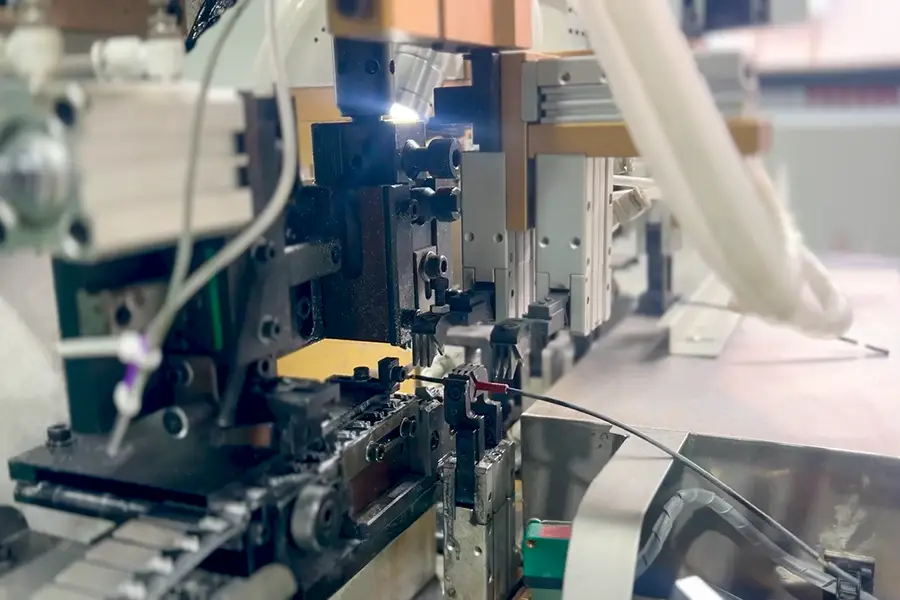
Its published manufacturing process includes PTC screening and pairing, wire processing, assembly, compression molding, surface-temperature testing, electrical-performance testing, and packaging. The company also states that customized samples can typically be produced in 3–7 days, with mass production generally taking 15–20 days depending on specifications and quantity. These capabilities make PTCYIDU a relevant option for equipment developers evaluating customized PTC heating solutions.
