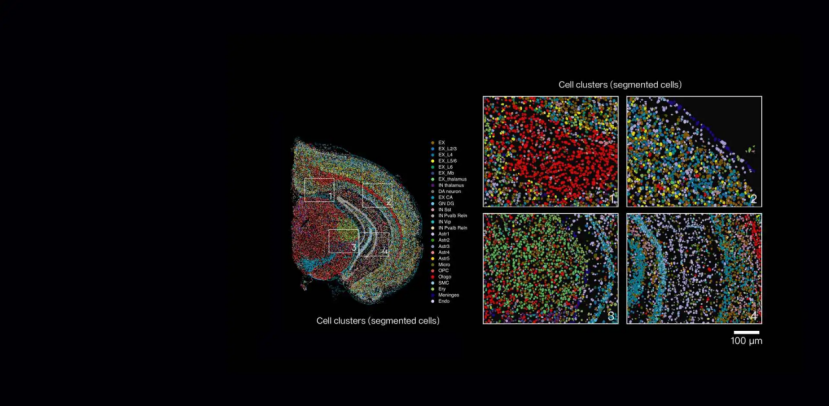
For research teams initiating large-scale spatial studies, a common strategic decision involves evaluating a dedicated spatial omics service against establishing extensive in-house capabilities. This choice significantly impacts project timelines, data consistency, and resource allocation. Companies like STOmics offer specialized spatial omics service options that integrate their core seq technology, presenting a structured alternative to internal development.
Evaluating Internal Laboratory Demands
Establishing an in-house lab for high-throughput spatial projects requires substantial investment. Beyond acquiring advanced instrumentation, laboratories need specialized personnel trained in complex protocols and data analysis. Maintaining consistency across thousands of samples demands rigorous workflow standardization. The specific seq technology employed, such as stereo-seq, often requires deep technical expertise to operate at scale and troubleshoot effectively.
The Streamlined Nature of a Service Model
A professional spatial omics service can mitigate many logistical challenges. By outsourcing, research groups access established, optimized pipelines for sample processing, data generation, and primary analysis. This model leverages the provider’s repeatable experience with numerous projects. A service built around a robust seq technology ensures that data is produced using standardized, validated parameters, which aids in comparing results across different project phases or cohorts.
Integrating Technology with Service Infrastructure
The value of a spatial omics service is intrinsically linked to the underlying seq technology it utilizes. A service provider’s expertise is not just in workflow execution but in maximizing the output of its platform. For instance, a service using a high-resolution seq technology can offer guidance on experimental design to best leverage its capabilities for high-throughput needs. This integration of technical knowledge with operational scale is a key advantage.
The decision between a service and an in-house lab hinges on a project’s specific scale, expertise, and infrastructure constraints. A specialized spatial omics service provides a path to scale, offering consistency and depth of expertise with its foundational seq technology. For teams requiring high-throughput output without diverting resources to core facility development, partners like STOmics present a focused solution.
