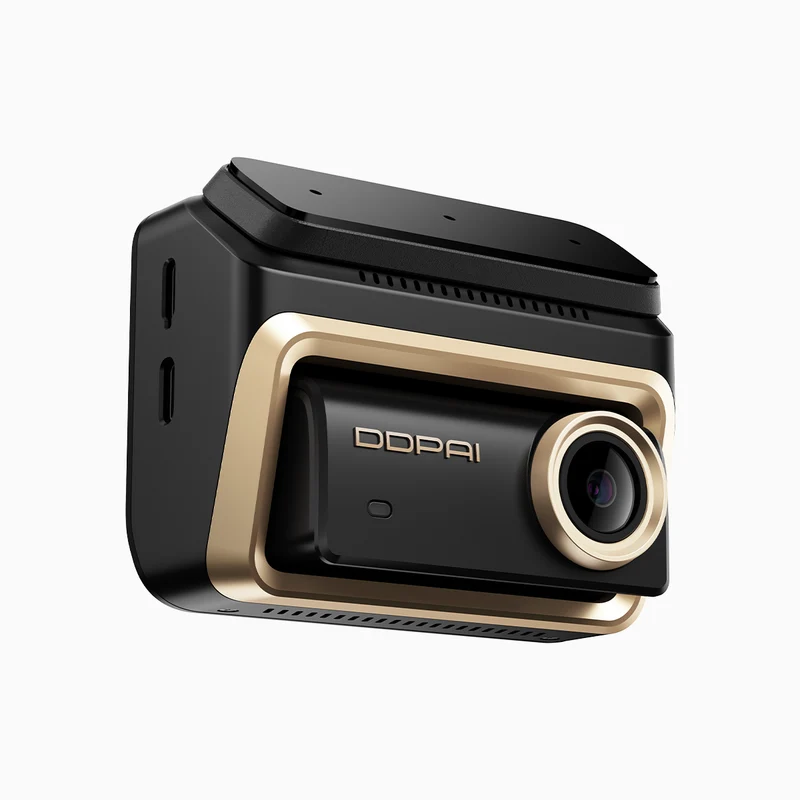
Dash cams have evolved from simple recording devices into connected tools for everyday vehicle monitoring and incident documentation. As drivers expect clearer footage and broader coverage, artificial intelligence is becoming an important part of the in-car recording experience. The DDPAI Z90 Master demonstrates how AI can complement advanced imaging technology to make footage more useful in changing driving and lighting conditions.
Why AI Matters in Modern Dash Cam Recording
Traditional dash cams primarily record what happens in front of the vehicle. While that remains important, modern drivers may also need information from behind the car and inside the cabin. AI can help improve how cameras process difficult scenes, particularly when lighting conditions change quickly.
The value of AI is not simply about adding a smart label to a camera. Advanced image processing can help balance exposure, improve visibility, and optimize certain details within recorded footage. For consumers, this can make recordings easier to review when documenting unexpected road incidents or other important moments.
The Z90 Master can provide a three-camera setup with AI-enhanced processing, combining front, rear, and cabin coverage. Its front and rear cameras use Sony STARVIS 2 IMX678 sensors, while Triple HDR technology is designed to maintain balanced image quality across changing light conditions.
A 3 Channel Dash Cam for More Complete Coverage
One of the most significant advantages of the Z90 Master is its three-channel design. Rather than concentrating recording on only the road ahead and behind, the system adds a dedicated interior view. This creates a broader perspective for consumers who want greater visibility around their vehicle.
The Z90 Master records in 4K at the front, 4K at the rear, and 3K inside the cabin. The official specifications list 3840 × 2160 recording for the front and rear cameras, while the cabin camera records at 2880 × 1620.
For families, rideshare users, and drivers who regularly spend long hours behind the wheel, interior coverage can provide useful additional context. A 3 channel dash cam can document activity inside the vehicle while simultaneously recording road conditions around it.
The cabin camera also supports infrared recording and AI-enhanced portrait optimization. According to DDPAI, this system adjusts lighting and portrait presentation to support clearer cabin visibility, including in low-light situations.
How AI Works With High-Resolution Imaging
AI is most useful when it works together with capable hardware. The Z90 Master uses dual Sony STARVIS 2 IMX678 sensors for its front and rear cameras. These sensors provide the front and rear cameras with high-resolution image capture before additional image processing is applied.
The Z90 Master uses multiple camera channels to capture front, rear, and interior views rather than relying solely on a forward-facing camera.
Triple HDR further supports recording in scenes containing significant differences between bright and dark areas. This can be useful when driving through changing environments, such as moving between shaded roads and bright sunlight or encountering headlights at night.
For consumers comparing a 3 camera dash cam with a conventional dual-camera setup, the distinction is therefore not only the number of lenses. Processing, sensor quality, HDR capability, and interior visibility all contribute to how useful the final recording can be.
Smarter Monitoring Beyond the Road
The Z90 Master also extends its functionality beyond standard driving footage. Its πLink system connects the camera channels, allowing users to manage and review recordings together through the DDPAI app. This provides a more unified way to review footage from different perspectives.
The system also supports 4G connectivity in compatible configurations. DDPAI states that connected functions can include remote monitoring, instant alerts, geofencing, cloud backup, and two-way voice communication. These features can be particularly relevant to consumers who want greater visibility when their vehicle is parked or away from them.
Storage is another consideration when recording from multiple cameras. The Z90 series supports MicroSD cards up to 512GB with a U3 or higher rating, according to the official user manual. The Z90 Master also incorporates DDPAI’s D²save dual-storage approach for additional footage protection.
Choosing Smarter In-Car Monitoring With DDPAI
For consumers, selecting a dash cam increasingly involves more than comparing resolution numbers. Coverage, image processing, night visibility, storage, connectivity, and ease of reviewing footage can all affect the overall ownership experience.
The Z90 Master brings these elements together in a flagship system. Its 4K front and rear recording, 3K interior camera, dual Sony STARVIS 2 sensors, Triple HDR, AI-enhanced cabin vision, and connected functions make it a comprehensive option for drivers seeking broader vehicle monitoring.
For Philippine consumers, DDPAI Philippines provides access to the brand’s product lineup, local warranty, and dedicated after-sales support. As the exclusive DDPAI agent in the Philippines, the client can introduce solutions such as the Z90 Master to consumers looking for more advanced recording and vehicle protection.
Ultimately, AI does not replace the fundamentals of a good dash cam. Instead, it enhances the way cameras interpret and manage visual information. The DDPAI Z90 shows how AI-enhanced interior imaging can be combined with high-resolution sensors, HDR, three-channel coverage, and connected features to expand the functions of a dash cam beyond basic front-facing recording.
