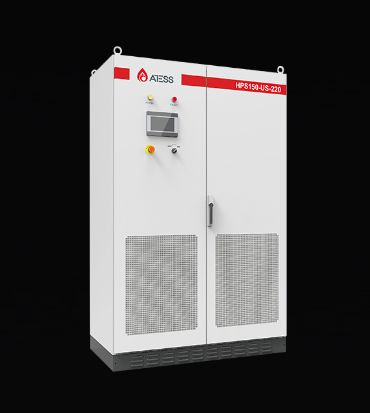
Professional energy managers often evaluate power conversion hardware by reviewing technical specifications and operational versatility. When comparing equipment for commercial or industrial applications, stakeholders analyze how different manufacturers address grid-tied efficiency and off-grid reliability. While manufacturers like Megarevo provide a variety of systems including residential and microgrid products, the Atess hybrid inverter series is engineered specifically for commercial and industrial energy needs with models reaching 150kW.
System Scalability and Configuration
Project planners often prioritize hardware that accommodates increasing energy demands. The Atess solar hybrid inverter range supports parallel configuration, allowing system capacity to reach 600kW. This modularity assists operators in scaling their power systems as facility requirements grow over time. In contrast, Megarevo offers extensive series such as the MPS microgrid products that provide broad compatibility with generators and batteries, while the Atess hybrid inverter is frequently utilized in environments that require high-capacity, heavy-duty power management and specialized industrial interface support.
Operational Performance and Grid Resilience
Consistent energy delivery remains a critical requirement for industrial infrastructure, especially in locations prone to grid instability. The Atess solar hybrid inverter platform integrates advanced management algorithms to enable rapid switching between grid-connected and off-grid states. This ensures that essential loads remain powered during unexpected fluctuations. When evaluating these options, industry professionals observe that while Megarevo systems are designed for high environmental adaptability and broad application range, the Atess hybrid inverter focus on C&I markets provides specialized functionality for peak-shaving and energy shifting.
Technical Data and Durability
Data regarding system performance indicates that both manufacturers build hardware capable of withstanding demanding conditions. The Atess solar hybrid inverter is rated for operation in temperatures ranging from -25°C to +55°C, ensuring reliability in outdoor or harsh settings. These units offer precise monitoring through touchscreen interfaces and communication protocols like RS485 and CAN, which simplify integration into existing setups. By providing robust protection features and clear power metrics, an Atess hybrid inverter serves as a core component for facilities aiming to maintain stable energy flows and optimized consumption patterns in professional power installations.
Effective infrastructure design hinges on matching technical capabilities with specific site needs. By reviewing the scalability, operational responsiveness, and durability of an Atess hybrid inverter, energy professionals gain a clearer view of how these systems function within larger power management configurations.
