Managing several vehicles creates different challenges from operating a single truck, van, or bus. Fleet managers need to know where vehicles are, what happens on the road, and whether driver behavior may increase operational risk. For this reason, AI fleet cameras are becoming part of wider fleet monitoring systems rather than serving only as tools for recording video.
Why Multi-Vehicle Fleets Need Centralized Visibility
As a fleet grows, supervisors cannot rely only on phone calls, handwritten reports, or driver feedback. They need a clearer view of vehicle movement, road events, and in-cab conditions across different routes and shifts. AI fleet cameras can add useful video context when an incident needs to be reviewed. This makes consistent review procedures important when several teams share responsibility for the same fleet.
Centralized visibility also helps managers identify repeated patterns. Harsh driving, distraction, route deviation, or unusual stops may be difficult to understand from isolated reports. When event data is linked with video and positioning, managers can compare situations across vehicles and decide which cases need closer review.
This is useful in logistics, mining, oil and gas, public transport, cold chain, engineering fleets, and school bus operations. Each sector has different routes and operating risks, but all need practical information that can support daily supervision.
How GPS and Video Work Together
Video shows what happened around or inside a vehicle, while positioning data explains where the event occurred. An AI dashcam with GPS tracking can connect recorded footage with time, location, and route movement. This gives fleet teams more context when reviewing incidents or checking vehicle activity.
For example, sudden braking may have different causes on a crowded city road, a construction site, or an open industrial route. When managers can review both footage and location, they can assess the event with more information instead of relying on a single data source.
GPS data can also support dispatch and route management. Supervisors can compare actual vehicle movement with planned work, while operators can check whether route deviations or long stops require follow-up. The useful point is not the camera alone, but the connection between video, positioning, and fleet data.
AI Functions for Driver and Road Risk Review
AI-based camera systems can help classify road and driver-related events. ADAS functions can focus on road risks, while DMS functions can monitor driver behavior such as distraction or fatigue-related actions. These features can help managers focus on events that need attention instead of reviewing long periods of normal footage.
This matters in larger fleets because supervisors may receive information from dozens or hundreds of vehicles. Event-based review can make the workload more manageable. Human judgment is still needed, especially when a recorded event depends on road conditions, vehicle type, or operating rules.
Camera placement and system settings also need to match the application. A school bus, delivery van, mining truck, and public transport vehicle do not work under the same conditions. Alert settings should therefore be adjusted around actual routes, driver tasks, and fleet policies.
What Commercial Fleet Hardware Should Support
Commercial fleet equipment needs stable video recording, mobile communication, positioning, and suitable interfaces for platform connection. Fleet owners and system integrators should also consider power supply, storage, mounting space, data transmission, and compatibility before choosing hardware for a large deployment.
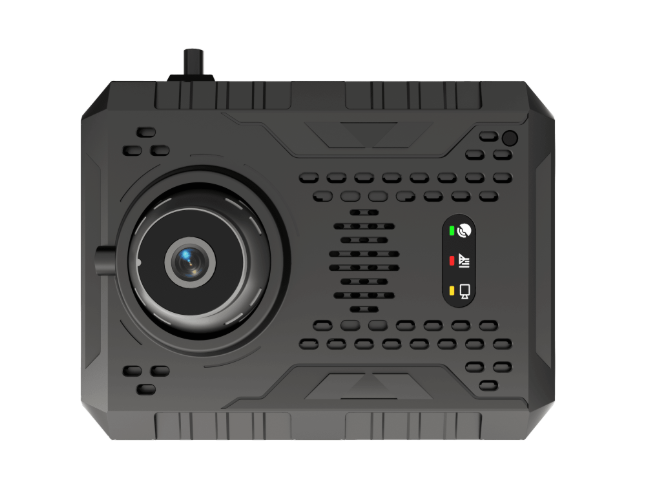
BSJ Technology develops AI video telematics and Fleet IoT equipment for B2B fleet projects. Its EH26 is an intelligent AI dashcam for commercial fleet management. It combines dual-channel HD video recording, AI-powered ADAS and DMS algorithms, 4G LTE communication, and multi-system GNSS positioning in one device.
For buyers considering an AI dashcam with GPS tracking, this type of integrated design can reduce the need to combine several separate units. It can also simplify installation planning. Buyers still need to check platform compatibility, communication requirements, storage strategy, mounting position, and vehicle power conditions before deployment.
Integration Matters in Multi-Vehicle Projects
Fleet projects often involve existing dispatch software, telematics platforms, or industry-specific management systems. Hardware that can connect with third-party platforms gives system integrators more flexibility when working with different customer environments.
BSJ Technology supports OEM and ODM cooperation as well as integration with third-party software platforms such as Wialon and GpsGate. They also have a global technical support department and more than 400 R&D personnel. These capabilities are relevant when distributors or solution providers need customization, platform coordination, or technical support across different markets.
An AI dashcam with GPS tracking should therefore be evaluated as part of a complete data workflow. Buyers should ask how video is transmitted, how positioning is displayed, how alerts are handled, and how the device connects with current fleet systems. These questions are often more useful than comparing camera resolution alone.
A More Practical Way to Plan Fleet Monitoring
Multi-vehicle operations need information that supports dispatch, incident review, driver management, and daily decisions. Collecting more data does not automatically improve fleet control. The system also needs clear rules for how that data will be reviewed and used.
AI fleet cameras can provide useful visibility when they are matched with real routes, vehicle types, and management needs. Fleet owners, distributors, and system integrators should compare hardware functions together with platform integration, communication, support, and deployment requirements. This creates a more practical basis for selecting video telematics equipment for larger commercial fleets.
