Five signs that dispensing equipment may need an upgrade include recurring dispensing defects, increasing maintenance downtime, limited flexibility for new products, insufficient production throughput, and inadequate quality monitoring.
A liquid dispensing system should be evaluated not only by its original specifications but also by its performance under today’s materials, product designs, and throughput expectations. With experience in precision automation, Axxonauto operates in a field where recognizing these warning signs can help manufacturers make better-informed equipment investment decisions.
When Do Recurring Dispensing Defects Signal an Upgrade?
Repeated defects are one of the clearest reasons to review an existing dispensing process. Deposits may become uneven, adhesive beads may shift away from target areas, or material may drip and string after application. These issues can arise from worn valves, unstable pressure, clogged nozzles, inconsistent fluid temperature, or inaccurate positioning.
Before replacing a machine, engineers should determine whether the problem originates in the equipment or in another part of the process. A material batch change, altered ambient conditions, poor maintenance, or an outdated dispensing recipe can produce symptoms similar to mechanical deterioration. Reviewing defect records alongside calibration results and maintenance history helps distinguish temporary process variation from persistent equipment limitations.
An upgrade becomes more compelling when defects continue despite reasonable corrective action. If existing controls cannot maintain the required deposit geometry or repeatability across normal operating conditions, newer motion control, valve technology, or monitoring capabilities may address a genuine technical gap.
| Warning sign | What to check first | When upgrade becomes justified |
| Recurring defects | Material batch, recipe, maintenance history | Defects persist after corrective action |
| Rising maintenance time | Spare-part availability, fault frequency | Downtime or repair cost exceeds replacement value |
| Product changes | Tolerances, material compatibility, motion range | Existing machine cannot meet new process window |
When Does Rising Maintenance Time Signal an Upgrade?
Frequent nozzle blockages, valve servicing, unexpected stops, and repeated recalibration can gradually reduce the productive time available on a manufacturing line. Maintenance itself is normal; the warning sign is a pattern of increasing intervention that disrupts output or places excessive demands on engineering staff.
A useful assessment tracks downtime frequency, repair duration, replacement-part consumption, and the time spent recovering from faults. These figures help reveal whether an older system remains economically viable. If spare parts are difficult to source or specialized technical support is increasingly unavailable, the risk of prolonged interruptions also deserves consideration.
Preventive maintenance and improved operating procedures may extend equipment life, so replacement should not be the automatic response to every fault. However, persistent failures combined with obsolete controls or deteriorating mechanical performance can make modernization more practical than repeated repairs.
How Do Product Changes Expose Dispensing Equipment Limits?
Electronics manufacturers often introduce smaller components, new package formats, and different adhesive formulations as product designs evolve. Equipment configured for a narrow range of applications may struggle with tighter placement tolerances, unfamiliar deposit shapes, or more demanding production sequences. Such limitations can slow new product introduction even when the machine still performs adequately on established jobs.
A modern dispensing equipment assessment should examine the full range of current and anticipated process requirements. Relevant factors include material compatibility, programmable motion paths, valve options, accessible work area, recipe management, and the ability to accommodate different component geometries. Future requirements should be grounded in realistic product plans rather than speculative features that may never be used.
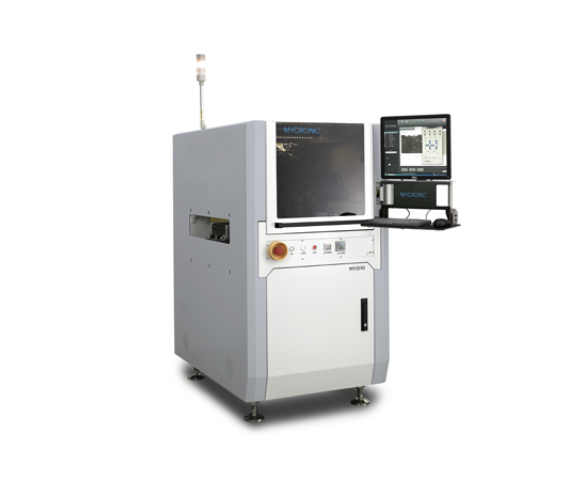
The MYD10X, a compact inline precision dispensing system in the MYSmart series, illustrates how inline solutions can support varied consumer electronics applications. The stated application range includes underfill, hot-melt dispensing, pin encapsulation, edge and corner bonding, surface-mount applications, package-on-package assembly, dam-and-fill processes, flexible printed circuit components, and reinforcement materials.
When Does Dispensing Equipment Throughput Fall Short?
A machine that once met demand may become a bottleneck as order volumes increase or cycle-time targets tighten. Slow movement between dispensing points, lengthy recipe changes, manual inspection steps, and frequent material replenishment can all constrain actual output. Nameplate speed alone cannot reveal how much usable production capacity the system delivers.
Manufacturers should measure cycle time across the entire dispensing sequence, including loading, positioning, fluid application, inspection, and recovery from minor interruptions. Comparing these observations with required output can show whether the main constraint lies within the dispenser or elsewhere on the line. If the bottleneck is caused by upstream handling or downstream curing, replacing the dispensing machine may have little effect.
An upgrade is worth evaluating when the dispensing stage consistently limits line capacity and process optimization cannot close the gap. The business case should compare expected throughput gains against installation costs, operator training, integration work, and any production interruption during commissioning.
When Is Dispensing Equipment Quality Monitoring Insufficient?
Older systems may provide limited process records or depend heavily on operators to notice deviations. This can make it difficult to identify when a defect began, which settings changed, or whether a process remained stable across an entire batch. As traceability expectations rise, the absence of useful production data can become a significant operational weakness.
Inspection and monitoring capabilities should match the defects that matter in the application. Machine vision may help assess deposit position or visible coverage, while other quality concerns may require different inspection methods. Data logging can connect process settings with inspection outcomes, but collecting information is useful only when staff have clear criteria for responding to abnormal results.
Conclusion
Equipment replacement is most valuable when it resolves a measurable production constraint rather than simply introducing newer technology. Recurring defects, escalating downtime, limited process flexibility, insufficient throughput, and weak quality monitoring provide useful starting points for an evidence-based review.
Axxonauto operates in the precision dispensing market, where equipment capabilities must be matched to real manufacturing needs. A structured assessment of process data, maintenance costs, and future product requirements can help determine whether repair, targeted modernization, or a new system offers the strongest long-term value.
FAQs
How Often Should Dispensing Equipment Be Evaluated for Replacement?
There is no universal replacement interval. Performance reviews should consider equipment condition, maintenance trends, process requirements, parts availability, and expected production changes rather than relying on machine age alone.
Can Dispensing Accuracy Be Improved Without Replacing the Machine?
Yes. Calibration, nozzle replacement, pressure adjustments, material conditioning, and revised process parameters may resolve some accuracy problems. Persistent defects after systematic troubleshooting suggest that the equipment’s capabilities may no longer meet requirements.
