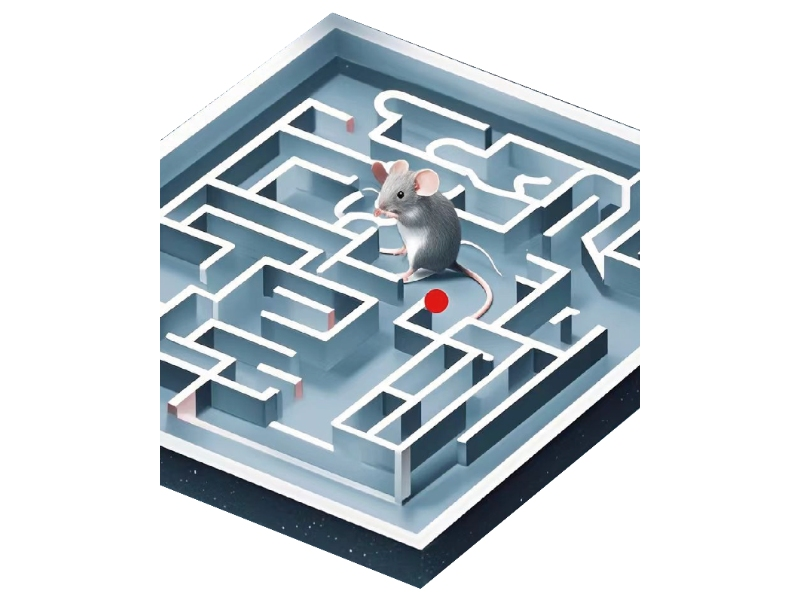
Animal behavior research provides valuable insights into cognition, emotional regulation, and neurological mechanisms. In rodent studies, researchers often evaluate movement patterns, exploration habits, and social interactions to understand behavioral changes caused by diseases, genetic modifications, or therapeutic treatments. However, many behaviors are complex and difficult to quantify through observation alone. Reliable analysis requires objective measurement methods that can capture subtle differences and generate consistent data. BioMed Easy provides life science instruments and software solutions designed to support behavioral neuroscience and related research applications.
The Value of Precise Behavioral Measurement in Animal Studies
Behavioral experiments are an important part of neuroscience and pharmacology research, because animal responses can reflect changes in brain function. Whether researchers are investigating memory, anxiety, social interaction, or neurological disorders, accurate behavioral measurement is essential for drawing reliable conclusions.
Traditional manual observation methods often require researchers to monitor animals continuously and record specific behaviors. While these approaches can provide useful information, they may become inefficient when experiments involve long recording periods or multiple animals. Subtle changes in movement speed, exploration patterns, or interaction behaviors can also be difficult to identify consistently.
Another challenge is reducing observer-related variation. Different researchers may interpret or record behaviors differently, which can affect data reliability. Standardized measurement methods help improve repeatability and allow researchers to compare results more effectively.
By automatically capturing and analyzing movement data, animal video tracking software provides researchers with a more objective approach to behavioral evaluation. It reduces dependence on manual scoring and helps transform animal activity into measurable research data.
Transforming Animal Movement Into Measurable Behavioral Insights
Video tracking technology enables researchers to analyze animal behavior by converting recorded movement into quantitative information. Instead of relying only on visual descriptions, researchers can examine specific behavioral parameters that provide deeper insight into animal responses.
During an experiment, video recordings are processed to identify movement trajectories and behavioral patterns. Common measurements include distance traveled, movement velocity, time spent in different zones, exploration frequency, and activity levels.
These measurements help researchers understand how animals respond under different experimental conditions. For example, changes in movement distribution may indicate altered anxiety-related behavior, while differences in exploration strategies may provide information about cognitive function.
Accurate movement analysis is especially valuable in neuroscience studies because many behavioral changes are not immediately visible. Quantitative tracking allows researchers to identify patterns that may otherwise be overlooked through simple observation.
Enhancing Maze Test Analysis With Automated Tracking
Maze-based experiments are widely used to study cognition, memory, exploration, and anxiety-related behaviors in rodents. Since these tests rely heavily on animal movement and decision-making, accurate tracking is necessary for reliable results.
In open field tests, researchers analyze how animals explore different areas of the environment, including the time spent in central and peripheral zones. Elevated plus maze experiments examine how animals respond to open and enclosed spaces, providing information related to anxiety-like behaviors.
Other models, such as Y-maze and Morris water maze tests, are commonly applied in studies of spatial learning and memory. Researchers need detailed movement records to evaluate exploration routes, activity patterns, and learning performance.
Automated tracking improves maze-based experiments by recording movement trajectories and behavioral parameters, reducing manual workload and ensuring consistent evaluation across experimental groups.
Quantifying Anxiety-Related Responses Through Tracking Technology
Anxiety-related behaviors are often reflected through subtle changes in exploration and avoidance patterns. Because these behaviors may vary between individuals, accurate measurement is important for obtaining reliable experimental results.
Common anxiety models include elevated plus maze, open field test, and light-dark box experiments. Researchers typically evaluate indicators such as time spent in exposed areas, movement between compartments, and exploration frequency.
Automated tracking provides a more detailed analysis of these behaviors by recording movement continuously. Instead of relying only on visual judgment, researchers can examine objective data to compare behavioral differences between control and experimental groups.
This approach is particularly valuable in pharmacological studies. When evaluating potential treatments, researchers need accurate behavioral measurements to determine whether compounds influence anxiety-related responses or other aspects of animal activity.
Analyzing Social Interactions Through Advanced Tracking Methods
Social behavior research requires more complex analysis because researchers must evaluate interactions between multiple animals. These studies provide important information about communication, motivation, and behavioral changes associated with neurological conditions.
Social preference tests and social interaction experiments often involve measuring behaviors such as approach, avoidance, contact duration, and interaction frequency. However, manually analyzing these behaviors can be challenging, especially when several animals move simultaneously.
Advanced tracking solutions help researchers overcome these difficulties by monitoring individual movement patterns and recording interaction-related events. Accurate tracking allows researchers to evaluate social responses more objectively and identify behavioral differences between groups.
These capabilities support a wide range of applications, including neuroscience research, psychiatric disorder models, and studies of genetic factors affecting social behavior.
Essential Features of Modern Behavioral Tracking Solutions
Selecting suitable analysis software is an important consideration for laboratories conducting animal behavior studies. A reliable solution should provide accurate tracking, flexible applications, and efficient data processing capabilities.
Tracking accuracy is one of the most important factors. The software should consistently recognize animal positions and record movement changes under different experimental conditions.
Application flexibility is also essential. Research laboratories may conduct different behavioral assays, including maze experiments, anxiety assessments, and social interaction studies. A versatile platform allows researchers to apply the same analysis approach across multiple experimental models.
Data processing efficiency should also be considered. Automated calculation of behavioral parameters reduces manual effort and improves research productivity. Organized data output makes it easier to compare results and identify behavioral differences.
The Video Tracking Software from BioMed Easy is designed to support quantitative animal behavior analysis. It helps researchers monitor movement patterns and evaluate behavioral responses across different neuroscience research models.
For laboratories using animal video tracking software, choosing a solution with reliable tracking performance and flexible analysis capabilities can improve experimental consistency and data quality.
Turning Behavioral Observations Into Scientific Evidence
Modern behavioral neuroscience increasingly depends on accurate, repeatable, and data-driven research methods. While observation remains an important part of animal studies, automated tracking provides researchers with deeper insights by converting complex behaviors into measurable information.
From maze experiments and anxiety evaluation to social interaction studies, video tracking technology supports more precise behavioral analysis. By improving measurement consistency and reducing subjective variation, these tools help researchers better understand relationships between behavior and neurological mechanisms.
BioMed Easy specializes in life science instruments and software for animal behavior, neuroscience, pharmacology, and physiological research. Its solutions support universities, research institutions, CROs, and pharmaceutical companies with reliable tools for behavioral analysis. Through advanced research equipment and software development, BioMed Easy helps researchers improve data accuracy and advance discoveries in life science fields.
