Patient–ventilator asynchrony occurs when delivered assistance does not align with neural respiratory demand. The mismatch may involve triggering, flow delivery, cycling, or repeated efforts within one machine breath, and it can result from leakage, weak effort, high respiratory drive, unsuitable sensitivity, excessive support, or an inappropriate inspiratory time.
At the bedside, a medical ventilator can display pressure and flow patterns that reveal clues, but recognition remains inconsistent when workloads are high or events are intermittent. Advanced algorithms aim to analyze continuous signals, identify recurring patterns, and bring concerning changes to clinical attention.
Their role should be framed carefully: an algorithm can process more breaths than a person can review manually, yet its conclusions depend on signal quality, patient population, and validated definitions.
Without transparent limits, alarms, and clinician oversight, a medical ventilator should not change critical parameters. Effective mitigation begins by identifying the type and cause of mismatch, then correcting the interface, circuit, secretion burden, mode, trigger, flow, pressure, or cycling setting that produced it.
Clinicians should also consider whether discomfort, delirium, fever, metabolic acidosis, or excessive secretions are driving respiratory demand, since changing machine timing alone cannot correct a mismatch rooted outside the control settings. Treating the underlying driver often reduces mismatch more effectively than repeated setting changes.
How Intelligent Analysis Can Support Detection
What buyers call a best cpap machine may automatically recognize obstruction and adjust pressure during sleep, but critical-care synchrony involves a broader set of signals and faster physiological change.
Algorithms can combine airway pressure, flow, volume, leakage, respiratory rate, oxygen saturation, timing relationships, and trend history to flag ineffective efforts, delayed triggering, premature cycling, prolonged inspiration, or double triggering. Machine-learning approaches may classify waveform segments, while rule-based controllers can adjust within predefined ranges after detecting a specific pattern.
Both approaches require clean training data, external validation, and safeguards against overreaction to cough, movement, suctioning, or a loose mask. Calling a system the best cpap machine does not establish a clinically validated synchrony-management function.
Performance must be reported with sensitivity, specificity, false-alarm burden, population characteristics, and the consequences of a missed event. Clinicians also need an understandable explanation of why an alert appeared and which signals changed, allowing them to verify the pattern rather than follow an opaque recommendation.
Prospective evaluation can compare algorithm output with expert annotation and patient effort signals across diverse conditions, revealing whether performance remains stable when leakage, weak effort, irregular breathing, or non-invasive interfaces complicate the waveform. Validation should also report where the classifier performs poorly or remains uncertain.
Connecting Waveforms, Physiology, and Remote Review
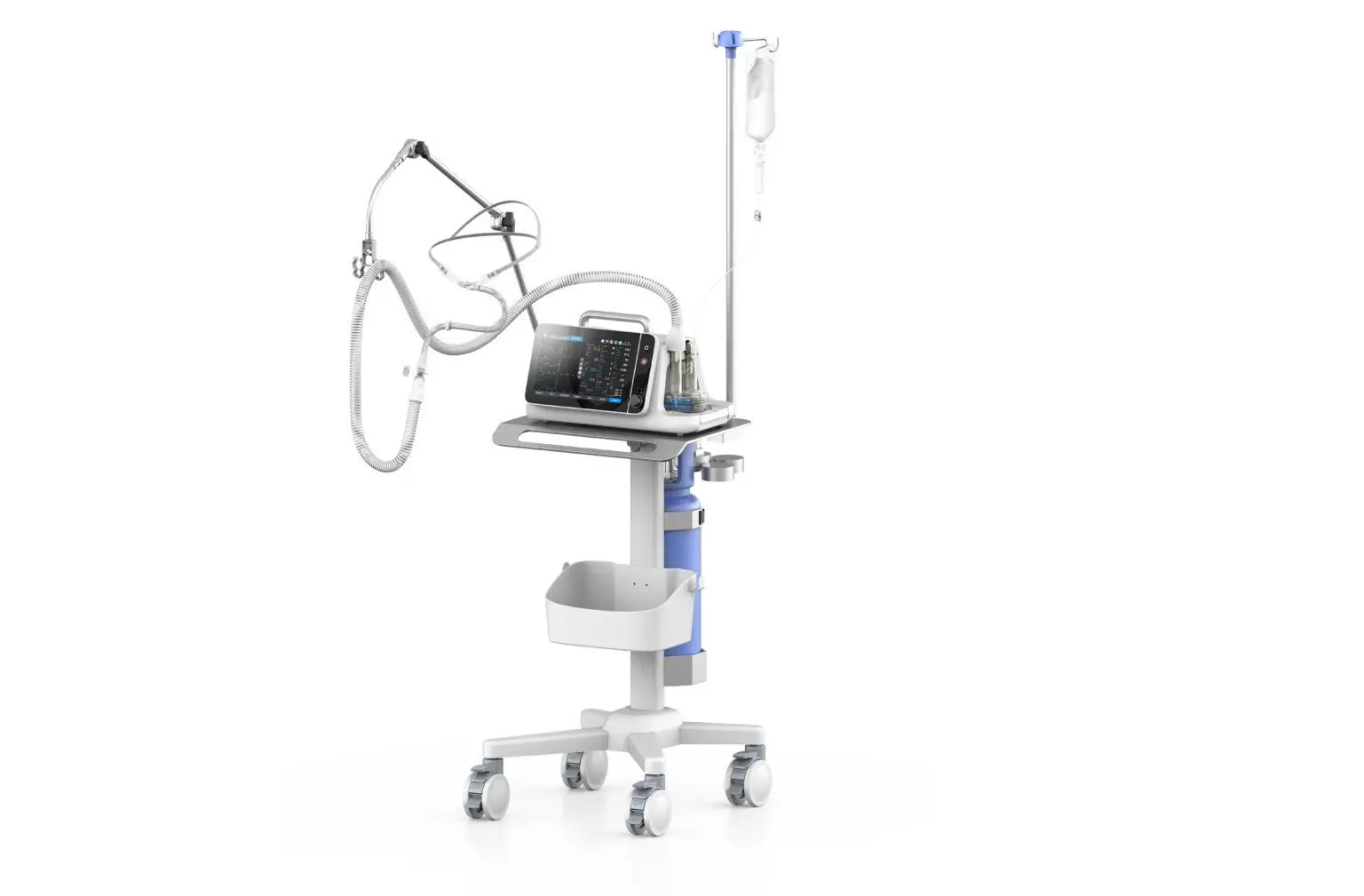
ResAero’s relevance to asynchrony lies less in its mode count than in the waveform context it exposes. Beyond brings pressure, flow, volume, respiratory rate, oxygenation, pulse rate, ROX, and VOX onto the same review surface, with tidal volume, minute ventilation, and leakage available alongside them.
For NIV review, proximal pressure sensing, leakage compensation, and target-volume functions provide more relevant synchrony context than a catalogue of available modes. For high-flow therapy, Beyond describes AI-assisted control that continuously monitors the ROX index and oxygen saturation and can adjust flow.
For respiratory assessment, these capabilities create a substantial data foundation, although the documented high-flow algorithm should not be presented as proof that every form of patient–ventilator asynchrony is automatically diagnosed or resolved.
Cloud connectivity, remote monitoring, and analytics reports can extend waveform and trend review beyond the immediate bedside, which may help specialists support distributed clinical teams. Secure access, clear alert ownership, and version-controlled software are essential because connected analysis introduces cybersecurity, privacy, and change-management responsibilities alongside the clinical opportunity.
Analytics should preserve the original data and software version behind each conclusion, making retrospective review possible when an alert is questioned, an update changes behavior, or a safety investigation spans multiple clinical sites. Traceable evidence supports accountable review across clinical, technical, and regulatory teams.
Safe Mitigation Requires a Human-Centered Control Loop
Within a structured response pathway, hospitals should treat intelligent detection as a supporting tool. An alert or waveform suggesting mismatch should prompt staff to check the patient, airway, mask, circuit, leakage, secretions, pain, anxiety, and sedation before modifying support.
Confirmation of the asynchrony type comes next, followed by a cautious adjustment and direct observation of its effect. Annotated waveforms and simulation help clinicians connect classic patterns with algorithm limitations. Governance committees need to review false alerts, missed events, software updates, override behavior, and outcomes after parameter recommendations.
Vendors should document the intended population, excluded conditions, validation datasets, and fallback behavior when sensors fail. Continuous learning is valuable only when it occurs under controlled change procedures and does not silently alter clinical performance.
Rather than removing clinicians from ventilation management, the system should shorten the interval between a harmful pattern and an informed correction. Transparent algorithms, reliable sensing, and bedside judgment can then reinforce one another without turning complex respiratory care into an automated black box.
Outcome studies should examine not only alert accuracy but also time to correction, comfort, gas exchange, sedation exposure, ventilation duration, and staff workload, because a technically accurate classifier may still fail to improve care. Only outcome-focused evaluation can show whether intelligent analysis delivers meaningful benefit.
