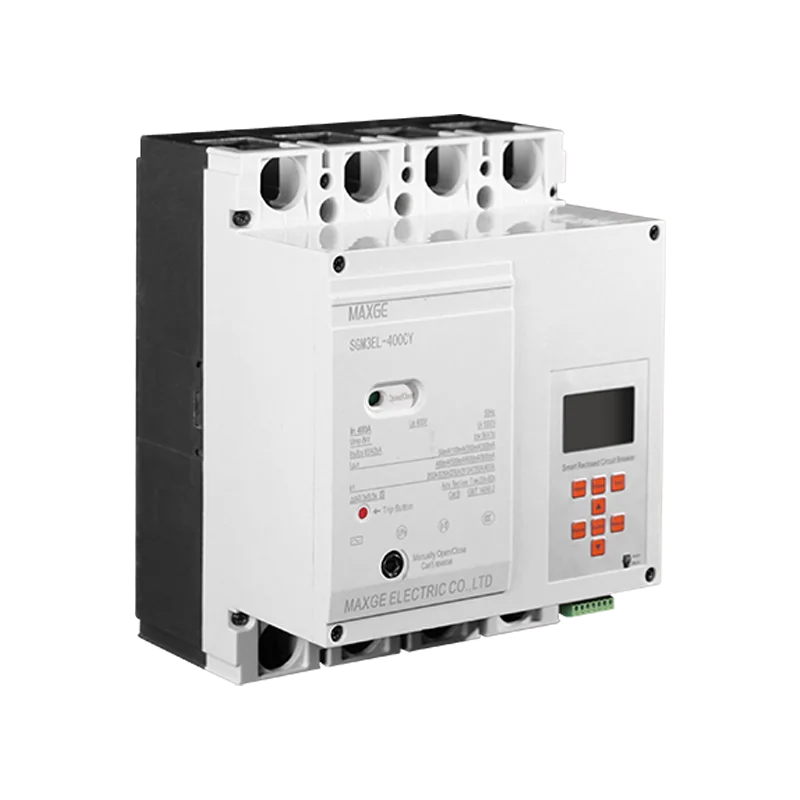
Selecting the right protection device is an important part of electrical system design. Among different electrical control products, molded case circuit breakers (MCCBs) are widely used to protect distribution circuits, motors, and other equipment from overloads and short circuits. However, choosing an MCCB is not simply a matter of selecting the correct current rating. The trip unit inside the breaker also affects how the protection system responds to abnormal conditions.
Thermal-magnetic and electronic trip units are two common approaches. Understanding how they work and what changes between them can help engineers and system designers select suitable protection for different operating conditions.
How Thermal-Magnetic Trip Units Work
A thermal-magnetic trip unit combines two protection mechanisms. The thermal element responds to prolonged overcurrent conditions, while the magnetic element reacts quickly to high fault currents associated with short circuits.
The thermal mechanism typically uses the heating effect of current to initiate tripping. Because the response is related to current and heat accumulation, it can provide practical overload protection for many conventional distribution applications. The magnetic mechanism, meanwhile, provides rapid protection when the current rises sharply.
This straightforward operating principle makes thermal-magnetic MCCBs suitable for many general-purpose applications. They can be used where circuit conditions are relatively predictable and sophisticated monitoring or adjustment is not required.
When comparing the types of MCCB in electrical systems, thermal-magnetic designs are often considered when simplicity, familiar operation, and straightforward protection settings are important.
What Changes With an Electronic Trip Unit?
An electronic trip unit measures electrical current through sensors and uses electronic circuitry to evaluate operating conditions. Instead of relying primarily on thermal characteristics, the breaker can process current information more precisely and apply defined protection settings.
This approach can provide greater flexibility when designing protection for systems with varying loads or more demanding coordination requirements. Depending on the breaker design, electronic protection may allow adjustments for different trip parameters and can support additional functions such as current indication or system monitoring.
For example, MAXGE offers electronic-type MCCBs with different configurations. Its SGM6E series covers frame sizes from 250A to 1600A, while the iSGM6E series incorporates an LCD interface and is available across the same general frame-size range. These products are designed for overload, short-circuit, and under-voltage protection in power distribution and motor-related applications.
The key difference is therefore not simply that one technology is older and another is newer. The more important question is whether the trip unit provides the adjustment, coordination, and information required by the electrical system.
Understanding MCCB Ratings Before Selection
MCCB ratings should always be considered together rather than viewed as a single number. Rated current, breaking capacity, voltage, pole configuration, and trip characteristics can all affect whether a breaker is appropriate for an installation.
The rated current determines the continuous current that the breaker is designed to carry under specified conditions. Breaking capacity is particularly important because the breaker must be capable of safely interrupting the prospective fault current at its installation point.
MAXGE’s SGM6 series, for example, includes fixed-type MCCBs from 125A to 1600A, with three- and four-pole configurations. Depending on the frame size and model, the series offers breaking capacities up to 100kA and is designed in accordance with IEC 60947-2.
These specifications demonstrate why breaker selection should be based on the complete electrical design rather than rated current alone.
Does the MCCB Maximum Rating Determine the Choice?
The MCCB maximum rating refers to the upper current capacity associated with a particular frame or product range. It does not necessarily mean that the circuit should operate continuously at that value.
For example, MAXGE’s thermal-adjustable SGM6s range extends to a 1600A frame size. Depending on the model, rated current options include values from 250A to 1600A, while adjustable thermal settings can provide additional flexibility for overload protection.
This distinction is important during system design. Engineers need to consider the actual load current, conductor capacity, expected fault current, ambient conditions, starting characteristics, and coordination with upstream and downstream protective devices.
Choosing a larger frame simply because it has a higher maximum rating does not automatically produce better protection. The selected breaker must match the requirements of the complete circuit.
Thermal-Magnetic or Electronic: Which Is More Suitable?
Thermal-magnetic protection can be appropriate for conventional distribution applications where operating conditions are stable and straightforward protection is sufficient. It can also be a practical choice when uncomplicated settings and maintenance are priorities.
Electronic trip units become more attractive when protection coordination, adjustable parameters, monitoring, or more precise current-based protection are important. They can provide additional control over how the breaker responds to different electrical conditions.
The right choice ultimately depends on the application. A distribution panel supplying relatively stable loads may have different requirements from a large industrial system containing motors, multiple feeders, and changing load profiles.
Rather than selecting a trip technology based only on specifications, it is better to evaluate the protection requirements, system architecture, fault levels, and coordination strategy as a whole.
Selecting Electrical Control Products for Reliable Protection
MCCBs are only one part of a complete protection system. Depending on the installation, designers may also need miniature circuit breakers, residual current devices, air circuit breakers, surge protective devices, contactors, thermal relays, and other electrical control products.
A coordinated product range can make system design and component selection more efficient. MAXGE provides product categories covering MCB, RCCB, RCBO, MCCB, ACB, smart breakers, industrial devices, and related equipment.
For projects requiring specific current ratings, breaking capacities, trip characteristics, or accessory configurations, reviewing detailed product specifications before selection is essential.
Make the Protection Decision Based on the Application
The difference between thermal-magnetic and electronic trip units becomes more meaningful when considered alongside the operating conditions of the electrical system. Thermal-magnetic trip units can provide a straightforward protection approach for many distribution applications, while electronic trip units can offer greater adjustment flexibility and additional functions for systems with more specific protection or monitoring requirements.
When selecting an MCCB, rated current and maximum frame or device rating should be considered together with prospective fault current, load characteristics, trip settings, coordination requirements, and future system changes. This broader evaluation can help engineers select protection that corresponds to the actual application without relying on a single specification.
MAXGE develops low-voltage circuit protection and control products for a range of electrical applications, supported by dedicated R&D capabilities, patented technologies, software copyrights, laboratory resources, and international certifications. Its portfolio covers conventional low-voltage distribution as well as protection requirements for PV, renewable energy, energy storage, and EV charging systems.
For information on thermal-magnetic or electronic MCCB configurations, product specifications, or application requirements, you can contact MAXGE through its official website. Its technical and product resources can support the evaluation of protection options for different electrical system configurations.
