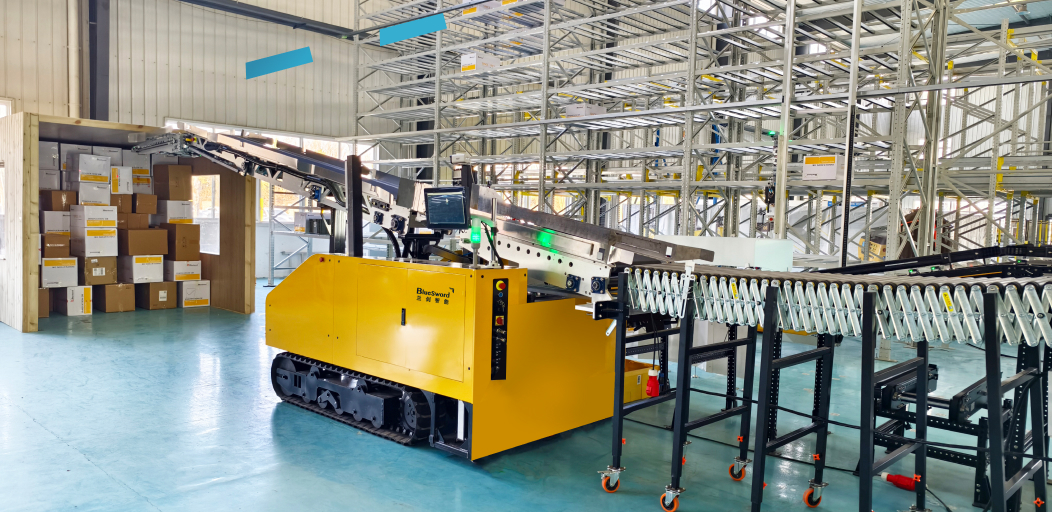
In modern logistics and warehouse environments, automation is increasingly used to improve material flow and reduce manual handling tasks. BlueSword provides industrial automation solutions that are often applied in controlled loading environments. A loading and unloading robot is commonly used to support repetitive cargo handling tasks, while an automatic truck loading and unloading system helps coordinate vehicle-side operations with warehouse workflows under structured control logic.
Safety Standards and Industrial Regulations
Regulations for automated truck handling systems are generally centered on operational safety, machine risk control, and workplace protection measures. In many regions, compliance requires manufacturers and operators to evaluate how loading and unloading robot systems interact with human workers and physical infrastructure. The automatic truck loading and unloading system must also follow established rules related to emergency stop functions, sensor validation, and mechanical safety barriers. These requirements are typically documented during system design and prior to installation approval.
Compliance Testing and System Validation
Before deployment, automated logistics systems are often required to undergo inspection and validation processes to ensure they meet applicable safety codes. BlueSword integrates loading and unloading robot technologies into industrial environments where structured testing is required. Their automatic truck loading and unloading system solutions are designed to support verification procedures that may include load stability checks, operational safety simulations, and integration testing with warehouse management systems. These processes help ensure the system operates within defined regulatory boundaries without disrupting existing logistics operations.
Operational Governance and Monitoring
Ongoing regulatory compliance does not end after installation. Many frameworks require continuous monitoring of automated systems to ensure consistent safety performance. In this context, loading and unloading robot applications must be periodically assessed for functional reliability, while the automatic truck loading and unloading system requires routine inspection of mechanical and control components. BlueSword supports structured operational environments where maintenance planning and system monitoring are incorporated into daily warehouse management practices.
Conclusion
Regulations for automated truck handling systems generally focus on safety design, certification procedures, and continuous operational monitoring. These requirements ensure that automation technologies are implemented in a controlled and predictable manner across logistics environments. From system validation to ongoing inspection, compliance frameworks emphasize structured processes that help reduce operational risks. In practical applications, organizations adopting automation typically align system design with regulatory expectations, ensuring that both equipment performance and workplace safety requirements are consistently maintained throughout the system lifecycle.
