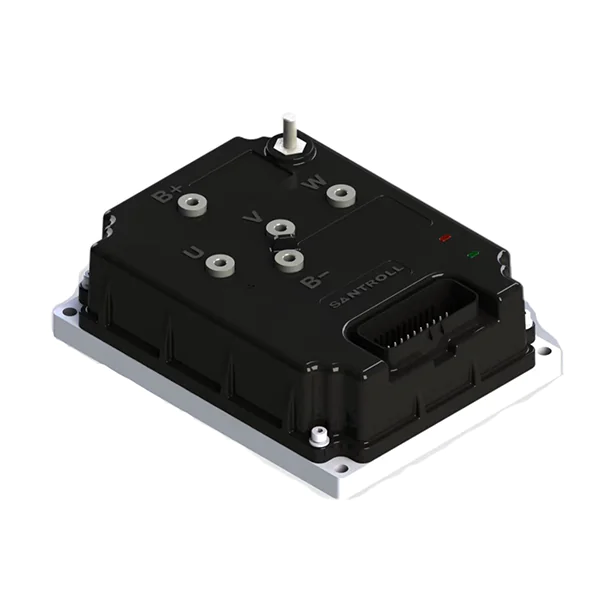
A common consideration for engineers is whether a standard electric motor can be adapted for variable speed operation. The answer is not universal, as capability depends fundamentally on the motor’s design and control system. While some motors inherently offer speed variation, others operate at a fixed pace determined by the electrical supply. For an electric motor manufacturer, designing for variable speed requires integrating specific engineering solutions to manage this functionality. Santroll addresses these requirements in its approach to motor manufacturing.
Inherent Speed Control in AC Induction Motors
A standard AC induction motor, for instance, typically runs at a speed locked to the frequency of the power supply. Altering its speed directly is not feasible without external components. To achieve variable speed, a device called a Variable Frequency Drive (VFD) is necessary. The VFD adjusts the input frequency and voltage to the motor, thereby controlling its rotational speed. This combination is a standard solution provided by an electric motor manufacturer for applications demanding adjustable operational rates.
The Built-In Capability of Brushless DC Motors
In contrast, Brushless DC (BLDC) motors are designed with variable speed as a core feature. Their construction includes a built-in controller that electronically commutates the motor, precisely regulating speed by manipulating the current supplied to the windings. This intrinsic design makes them a preferred choice for applications requiring precise and efficient speed control right from the initial integration.
Critical Factors for System Integration
Implementing variable speed is not merely about the motor itself. System designers must consider the added complexity and cost of control drives, along with potential effects on motor torque and thermal performance. An experienced motor manufacturer like Santroll engineers its products to perform reliably under the variable conditions created by these control systems, ensuring stability across the speed range.
The suitability of a motor for variable speed use is a question of its core architecture and the supporting electronics. While many motors can achieve variable speed with the correct drive system, others are conceived for this purpose from the ground up. A consultation with a technical expert at a specialized electric motor manufacturer can determine the most effective and reliable solution for specific speed control requirements.
