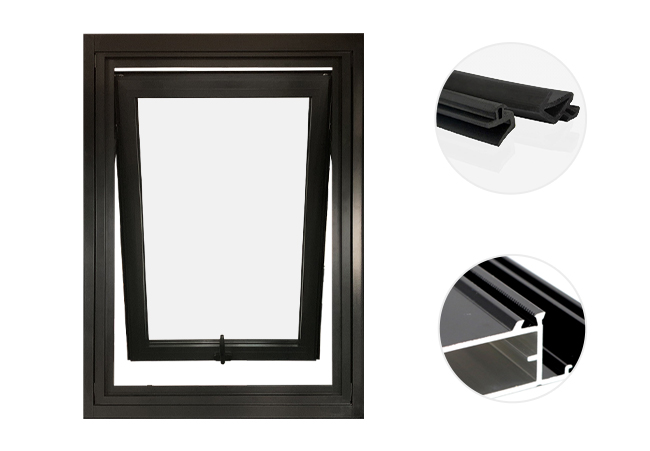
In the world of home improvement and architectural design, aluminum awning windows are often celebrated for their unique top-hinged design. They are the go-to solution for maintaining ventilation during a light rain and are prized for their excellent airtight seals. However, as with any specialized building component, they are not a universal solution. Understanding the technical limitations of this window style is essential for architects and homeowners to avoid costly design errors.
The Limitations of Exterior Clearance
The most significant “deal-breaker” for an awning window is a lack of exterior space. Because these windows swing outward from the bottom, they require a clear path to operate. If a window is located next to a narrow walkway, a deck with heavy foot traffic, or near low-hanging landscaping, an open awning sash can become a hazardous obstruction.
In high-traffic areas at ground level, a projecting sash poses a tripping or head-strike risk. In these specific scenarios, a sliding window or an inward-opening tilt-and-turn system is a safer and more practical choice.
Airflow and Emergency Exit Requirements
While aluminum frame awning windows are excellent for constant, low-velocity ventilation, they are not designed for maximum air volume. Because the sash remains angled over the opening, it does not allow for the 100% unobstructed airflow that a casement door or a large sliding window provides. If a room requires rapid cooling or significant cross-ventilation, the awning’s restricted opening angle might feel insufficient.
Furthermore, building codes often have strict “egress” requirements for bedrooms and basements. These codes dictate that a window must be large enough for a person to climb through in case of an emergency. Most awning windows, due to their friction stays and top-hinged mechanics, do not meet these emergency exit standards. Relying on them as the primary window in a bedroom can lead to serious safety violations.
Mechanical Stress and Cleaning Challenges
From a maintenance perspective, awning windows installed on upper floors present a “popular science” challenge: the physics of cleaning. Since the sash opens outward, reaching the exterior glass from inside the building is nearly impossible. Unless the windows are located on the ground floor or are accessible via a balcony, they will require professional exterior cleaning services.
Additionally, while aluminum is incredibly strong, very large awning sashes can put significant stress on the hinges and the winding mechanism over time. If a project requires exceptionally large glass spans, a fixed window or a reinforced sliding system is often more structurally sound.
Selecting the Right System with Bunniemen
Recognizing when to use an alternative system is a sign of professional design, and Bunniemen provides the technical variety to meet those diverse needs. With over 17 years of experience in the “smart” manufacturing of window systems, they understand that every architectural project has unique constraints. Their 3,500sqm production facility is equipped to handle everything from high-rise commercial orders to custom residential builds, all while meeting international standards like AS2047 and NAMI.
For projects where an awning window is the correct choice—such as high-wall placements or bathroom ventilation—the Bunniemen 65 Series Awning Window stands as a benchmark of quality. This series features a 1.8mm-thick thermal break aluminum profile and a 5-18A-5 double tempered glass configuration, ensuring top-tier thermal and acoustic insulation.
While they offer a wide range of alternatives for egress and high-traffic areas, their 65 Series remains a favorite for its sleek aesthetic and durability. By sourcing from a manufacturer that prioritizes precision-engineered hardware and robust frame thickness, you ensure that your aluminum awning windows—or any alternative you choose—are built to last.
