The digital dentistry market is expected to grow at a compound annual rate of almost 10% through 2026. This is a big change for the global dental industry. The laboratory sector has seen the most change. The switch from analogue to digital has gone from being a competitive edge to a must-have for survival. The traditional workflow, which includes physical impressions, stone models, and manual casting, will be replaced by an integrated digital ecosystem in 2026. This change is happening because of the need for micron-level accuracy and the growing need for advanced materials like multilayer zirconia and lithium disilicate, which need automated processing to reach their full aesthetic and functional potential.
The digital workflow is based on the “scan-design-manufacture” trio. By getting rid of the dimensional instability that comes with physical impression materials, labs can now get a “passive fit” that was hard to get consistently before. The result is a big drop in remake rates, which can go from an industry average of 4% to less than 1%. For a dental practice that sees a lot of patients, this increase in predictability means more work gets done and better results for the patient.
The Strategic Importance of MDfA in the Digital Age
To keep up with the fast-paced life cycle of lab technology, you need a partner who offers more than just a marketplace. MDfA (Messe Düsseldorf for Asia) is an important place to learn about new things from around the world that are specifically designed for the growing Asian market. MDfA is part of the global MEDICAlliance network, which makes sure that lab owners in the region can use validated, open-architecture systems that can grow in modules. This year, the main themes are software interoperability and AI-driven automation. For local labs that want to grow, the organization’s role in vetting global standards is very important.
MDfA helps people understand the ROI of digital upgrades by holding high-level business forums at the same time as its exhibitions. These platforms go beyond the hardware and look at the “human element” of the digital shift, like training staff and making sure data is safe. This all-encompassing approach makes sure that the money spent on new dental equipment is backed up by a long-term business plan. This lets Asian labs compete effectively on the global stage of restorative manufacturing.
FAMDENT Hyderabad: A Display of How Well Laboratories Work
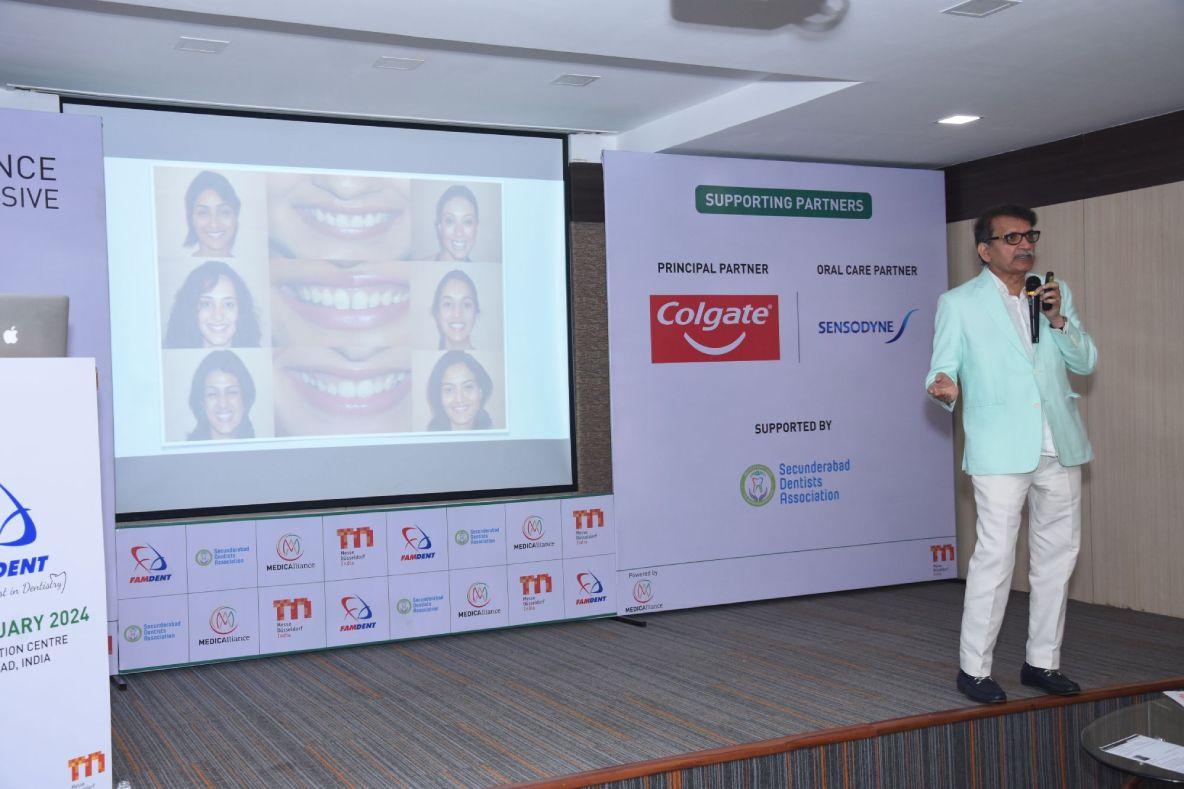
The FAMDENT Exhibition Hyderabad, which will take place on February 7–8, 2026, at the HITEX Exhibition Centre, is the main event for this technological revolution. Messe Düsseldorf India puts on the event, which has more than 120 exhibitors. It is the best place for dental professionals in South India to go. The 2026 edition focusses on the “Lab 4.0” idea, which is an environment where every step of the fabrication process is connected and based on data. This is important for lab technicians and owners.
People who go to the HITEX Exhibition Centre can see live demonstrations of the newest DLP (Digital Light Processing) 3D printers and high-speed 5-axis milling units. These machines are made to run as long as possible. They have automated tool changers and self-calibrating sensors that make sure the quality is the same across all the units. By watching these tools work, lab professionals can figure out the best way to combine additive and subtractive manufacturing to make the most of materials and speed up production.
Increasing Productivity with Integrated Dental Equipment
The key to digital productivity is being able to move data easily from the clinic to the bench. FAMDENT 2026 has a lot of different intraoral scanners and lab-grade desktop scanners that are the starting point for the digital thread. These devices take pictures of the mouth’s anatomy very quickly, which makes it possible to send cases right away over the cloud. This means that for a modern dental service, the design phase can start just minutes after the patient leaves the chair, cutting days off the usual production cycle.
The 2026 exhibition shows how important AI is for lab productivity, in addition to speed. AI-powered CAD software can now do things like marking margins and matching tooth libraries automatically. This lets technicians focus on the more complicated parts of customising aesthetics. The next generation of dental labs will be defined by the way that human creativity and machine accuracy work together. At the HITEX Exhibition Centre, professionals can see how these tools work together to make high-quality, customised restorations on a scale never seen before.
The end
Digital workflows have already changed the way dental labs work, so this is no longer just a dream. The ability to deliver precise, fast, and high-quality restorations will depend on how well digital tools are integrated as the industry moves through 2026. Laboratory owners can stay ahead of the curve in this changing industry by using the information from MDfA and checking out the new products at the FAMDENT Exhibition Hyderabad 2026. The official MDfA trade fair portal has information on the latest news that will help change the way labs work for the digital age.
