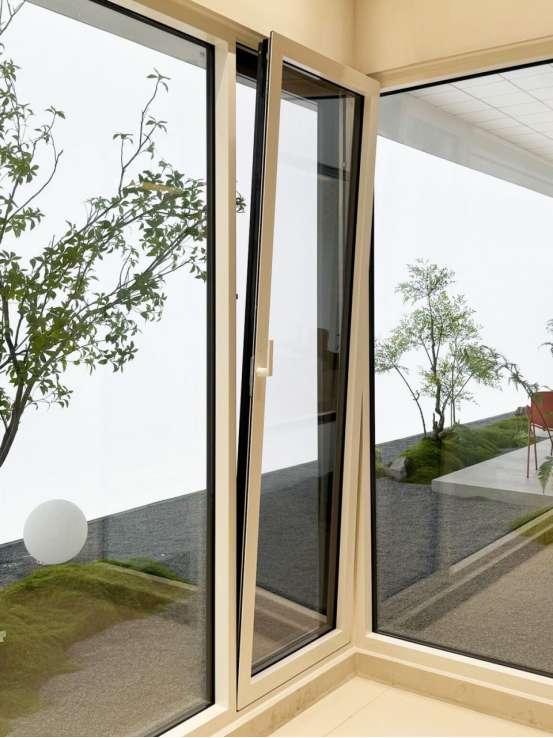
A tilt and turn window offers two opening modes from one sash: inward tilting for ventilation and inward turning for wider access. This flexibility depends on hardware that controls the sequence safely. Tilt and turn windows need hinges, locking points, handles, stays, and anti-misoperation parts that work in a precise order. CMECH concealed-hinge configuration information focuses on hidden components, secure operation, and refined appearance. The system succeeds only when the hardware guides the user smoothly between ventilation and cleaning access.
Two Modes Require One Clear Mechanism
The tilt position allows limited ventilation while keeping the sash partly restrained. The turn position opens the sash inward for cleaning, emergency access, or stronger airflow. A tilt and turn window must switch between these modes without confusing the user or stressing the frame. If the mechanism is poorly adjusted, the sash can feel heavy, catch at the corner, or move into the wrong mode during operation. The handle sequence should be intuitive, because users should not need special training to operate the sash safely.
Concealed Hinges Improve Appearance and Protection
CMECH describes a concealed hinge configuration designed to reduce visual hardware exposure while supporting performance. Concealed hinges can help the window maintain a clean interior line, but they still need strong load capacity and precise adjustment. For tilt and turn windows, hidden hardware must also coordinate with locking points around the sash. The visual benefit should never come at the cost of safe movement or proper sealing. Correct adjustment after installation is essential, since small errors can affect both modes.
Applications Favor Comfort and Maintenance
A tilt and turn window is well suited to apartments, hotels, offices, and high-performance homes where ventilation control and easy cleaning matter. Inward turning allows maintenance from inside the room, while tilting supports daily airflow. Designers should consider handle height, furniture clearance, insect-screen needs, and user expectations. The hardware should also support air tightness and water control when the sash is locked.
Dual-mode windows depend on accurate hardware selection and careful installation. Tilt and turn windows should be specified for sash size, hinge strength, locking sequence, concealed or exposed appearance, and local climate. The CMECH system information gives designers a technical reference for how a tilt and turn window can combine ventilation, security, and accessible maintenance. Proper adjustment lets the user enjoy two opening modes without creating confusing operation.
