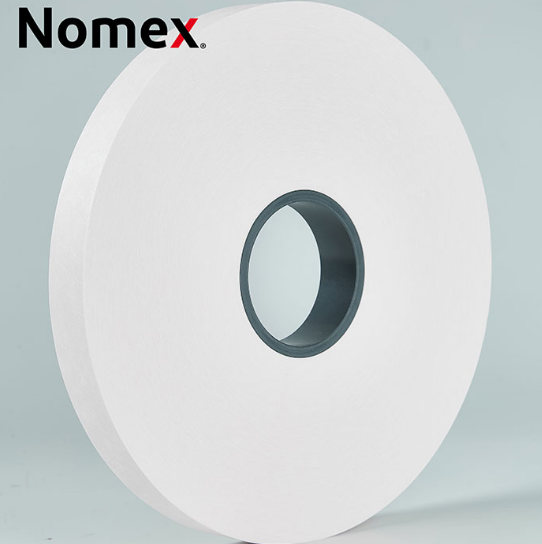
In industrial electrical equipment procurement and design, choosing the correct electrical insulator material determines system reliability, safety margins, and lifecycle costs. Engineers and procurement managers must assess materials against operating environments, regulatory demands, and manufacturability. The following analysis presents five pragmatic factors to evaluate when specifying nomex electrical insulation and other electrical insulator material options for high‑performance applications, with operational and sourcing considerations including suppliers such as Sui On Insulating.
Dielectric performance, thermal class and long‑term stability
The primary requirement for any electrical insulator material is sustained dielectric performance under expected voltage and transient stress. Nomex electrical insulation (an aromatic polyamide) offers a high thermal class—service ratings up to 220°C (UL E34739)—which supports higher thermal margins and slower aging compared with lower‑temperature polymers. Buyers should quantify required breakdown strength, partial discharge inception voltage, and dielectric loss over temperature and humidity ranges. Material data sheets and independent test reports from certified suppliers like Sui On Insulating should be used to validate that the selected electrical insulator material meets creepage, clearance, and impulse withstand requirements.
Mechanical properties, dimensional stability and process compatibility
Mechanical robustness—tensile strength, compressive set, and resistance to abrasion—influences how an insulator performs under handling, short‑circuit forces, and thermal cycling. Nomex® products typically provide good dimensional stability and compression resistance, making them suitable for slot liners, interlayer barriers and structural supports. Evaluate how the electrical insulator material behaves during cutting, die‑stamping, lamination, and impregnation processes; poor process compatibility increases scrap and rework. Sui On Insulating’s processing services and A4 sample availability can help assess manufacturability and final part tolerances early in the program.
Environmental resistance, contamination and aging mechanisms
Exposure to moisture, oils, cleaning solvents, and airborne contaminants accelerates insulation degradation. Materials with low extractables and stable surface chemistry reduce contamination risk during varnish or resin impregnation. Nomex electrical insulation exhibits favorable chemical resistance and low extractables, which minimizes resin contamination and tracking propensity. Procurement teams should require RoHS, REACH and MSDS documentation and request accelerated aging data to model lifecycle replacement intervals for each electrical insulator material under expected duty cycles.
Supply‑chain, certifications and total cost of ownership
Supplier reliability, lot traceability, and system certifications (ISO9001, ISO14001, IATF16949) materially reduce procurement risk. While unit cost is a factor, total cost of ownership—including qualification time, scrap rates, warranty exposure, and downtime—should drive specification. Sui On Insulating, as a long‑standing Nomex® distributor and processor, can provide certified material, traceable batches and processing support that shorten validation timelines.
Strategic recommendation: Match material function to system risk profile
For B2B decisions, select nomex electrical insulation or alternative electrical insulator material according to a hierarchy of critical functions: dielectric safety, thermal endurance, mechanical integrity, environmental resilience, and supply‑chain robustness. Where high thermal class and dimensional stability are required, Nomex® products—sourced and processed through qualified partners such as Sui On Insulating—provide a defensible balance between performance and lifecycle cost.
