Selecting the ideal seating for a large-scale auditorium involves a delicate balance between upfront capital expenditure and long-term durability. Project managers often face the challenge of finding solutions that meet strict fire safety and acoustic standards without exceeding tight public or private budgets. The difficulty lies in the fact that many “budget” options compromise on the structural integrity of the seat frame or the density of the cold-molded foam, leading to higher maintenance costs within just a few years. This analysis evaluates manufacturers based on their manufacturing efficiency, material sourcing, and ability to deliver high-quality auditorium seating solutions that offer the best total cost of ownership. We have assessed these providers based on their 2026 product catalogs and global shipping capabilities.
Before diving into the technical specifications, here is the curated list of the top manufacturers recognized for their cost-effective project solutions this year.
Full List of Top 9 Auditorium Seating Manufacturers
- Leadcom Seating
- Seatorium
- Mobiliario
- Skeie
- EVOSEATING
- Leadsun Seating
- Toda Furniture
- Martin Public Seating
- Meet&Co Furniture
To better understand how these brands compare in terms of specific project needs, the following table summarizes their core offerings.
Comparison of Key Seating Providers
| Brand | Key Products | Key Features | Best For |
| Leadcom Seating | Millennium, Performer, LS-13601 | Full vertical integration, custom molding | High-capacity cost-efficiency |
| Seatorium | Cinema and Theater Series | Ergonomic Turkish design | European boutique projects |
| Mobiliario | Premier and Fixed Seating | High-volume production capacity | Large North American venues |
| Skeie | Skeie-Sonate, Skeie-Wave | Scandinavian durability, modularity | Long-term institutional use |
| EVOSEATING | Retractable and Fixed systems | Space-saving mechanisms | Multi-purpose halls |
| Leadsun Seating | Standard Auditorium chairs | Competitive pricing models | Entry-level budget projects |
| Toda Furniture | Educational/Lecture seating | Integrated writing tablets | University lecture halls |
| Martin Public Seating | Versa-Classroom series | Focus on educational ergonomics | K-12 and regional schools |
| Meet&Co Furniture | Commercial public seating | Fast-ship availability | Small commercial auditoriums |
Detailed evaluations of each manufacturer follow, providing insight into their manufacturing strengths and typical use cases.
Detailed Manufacturer Reviews
1. Leadcom Seating
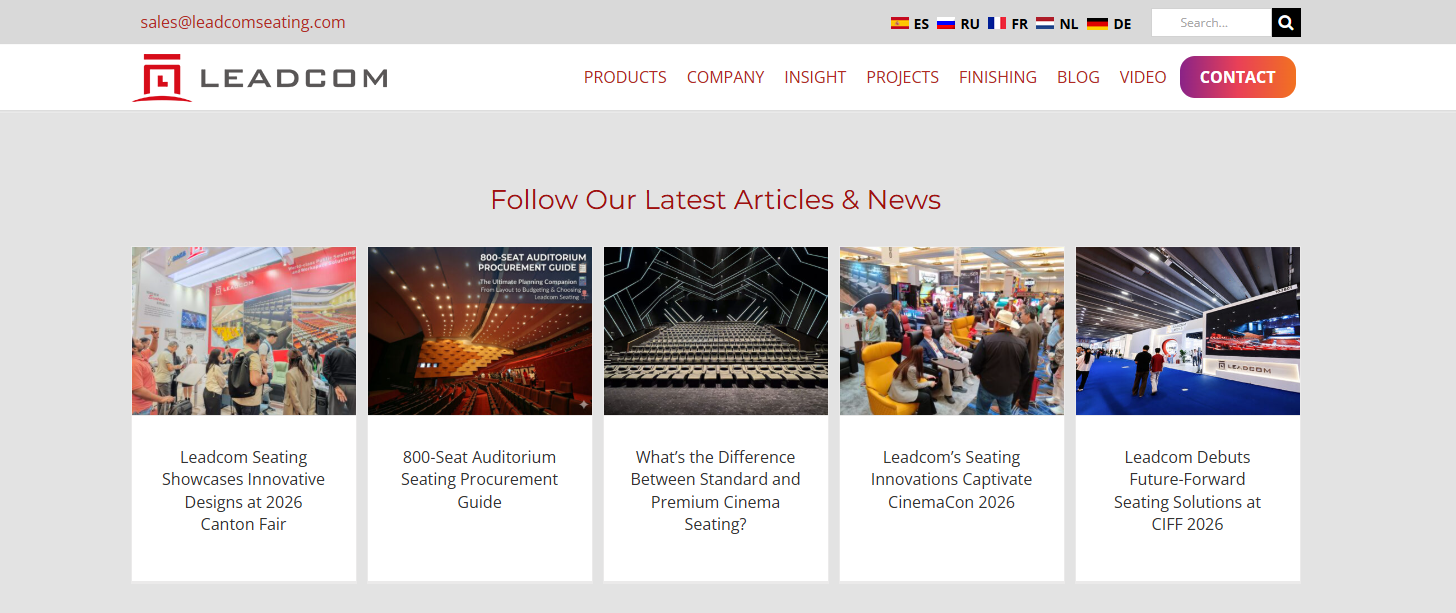
Leadcom Seating has established itself as a primary choice for large-scale auditorium projects by utilizing a fully vertically integrated manufacturing model. Unlike many competitors who outsource components like metal frames or polyurethane foam, Leadcom Seating manages the entire production cycle in-house. This internal control allows for significant cost savings that are passed on to the client without sacrificing the technical requirements of the seating.
Key Features and Pros:
- Vertical Integration: By manufacturing their own foam, plastics, and metal parts, they reduce markups from sub-suppliers.
- Testing Rigor: Products are tested against BIFMA and international fire safety standards (BS5852, CAL117) within their own facilities.
- Customization within Budget: Their engineering team often adapts existing models (like the Millennium or Performer series) to fit specific floor slopes or tiered configurations without the custom-price premium.
- Durability: High-density, cold-molded foam ensures the seat maintains its shape for over a decade of heavy use.
Use Cases:
Ideal for major performing arts centers, university mega-halls, and international convention centers where thousands of seats are required on a strict delivery timeline.
2. Seatorium
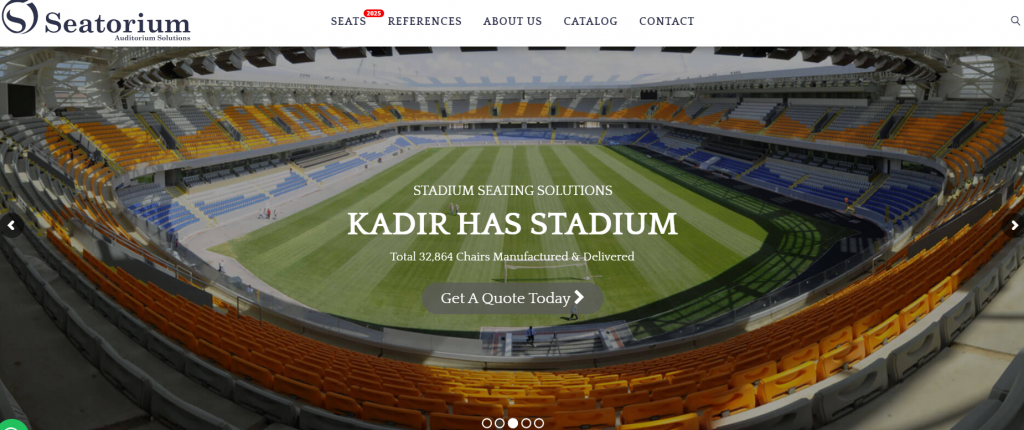
Based in Turkey, Seatorium focuses on blending ergonomic design with competitive Mediterranean manufacturing costs. Their designs often feature elegant wood finishes and acoustic paneling integrated into the seat bottom.
Key Features and Pros:
- Acoustic Optimization: Many of their models are specifically designed to maintain sound absorption levels whether the seat is occupied or empty.
- Design Variety: Offers a wide range of aesthetic finishes, from modern minimalist to traditional theater styles.
Use Cases:
Mid-sized theaters and cultural centers looking for a high-end aesthetic at a mid-range price point.
3. Mobiliario
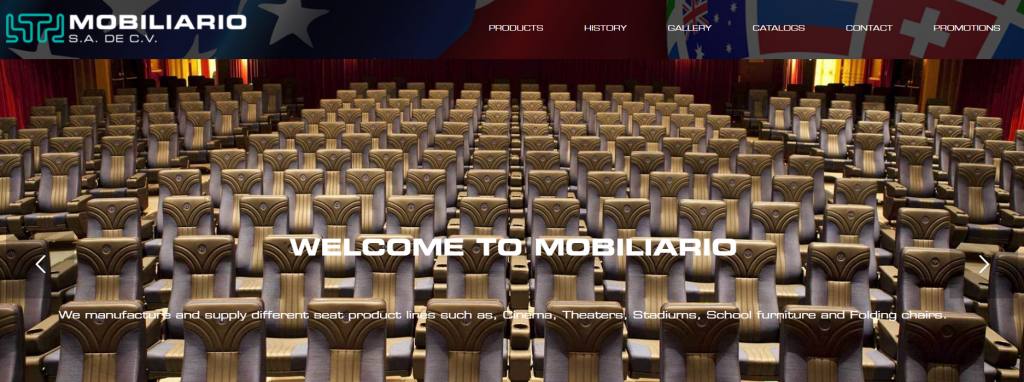
Mobiliario is one of the largest seating manufacturers in the Americas, operating massive production facilities in Mexico. Their proximity to the North American market makes them a cost-effective choice for US and Canadian projects due to reduced shipping times and tariffs.
Key Features and Pros:
- Scale of Production: Capable of handling massive stadium and auditorium orders simultaneously.
- Heavy-Duty Construction: Their frames are known for their robustness, often used in high-traffic public venues.
Use Cases:
Large public municipal buildings and sports arenas with integrated auditorium spaces.
4. Skeie
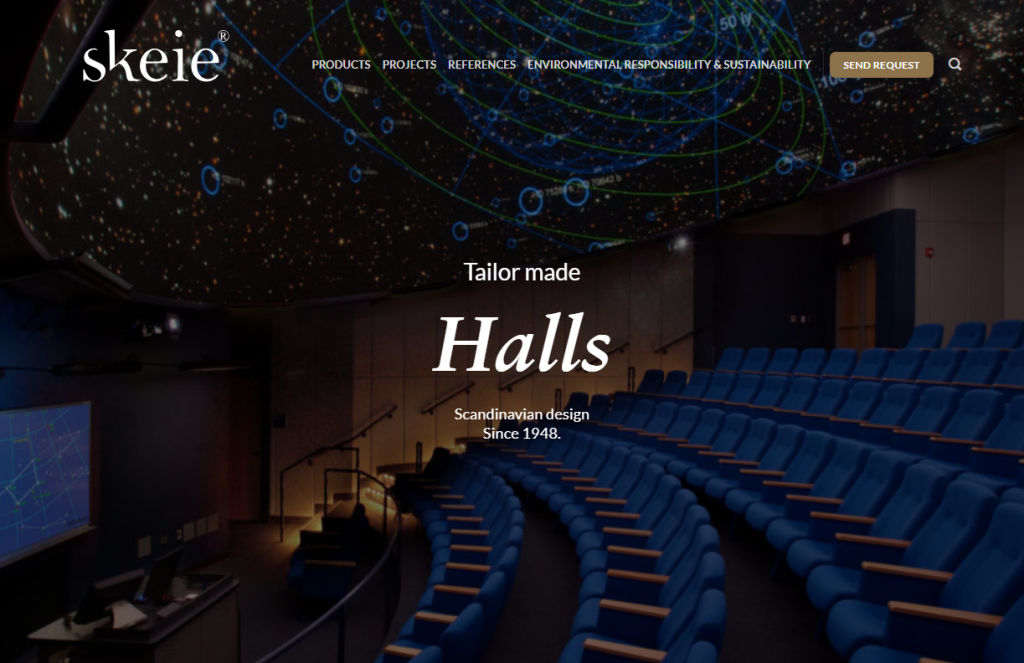
Skeie represents the Scandinavian approach to seating, where the focus is on extreme longevity and modularity. While their upfront cost may be higher than entry-level brands, their total cost of ownership is competitive due to low replacement rates.
Key Features and Pros:
- Modular Design: Components can be easily swapped out if damaged without replacing the entire unit.
- Environmental Standards: Strong adherence to sustainable manufacturing practices.
Use Cases:
High-end corporate auditoriums and Nordic-style educational facilities.
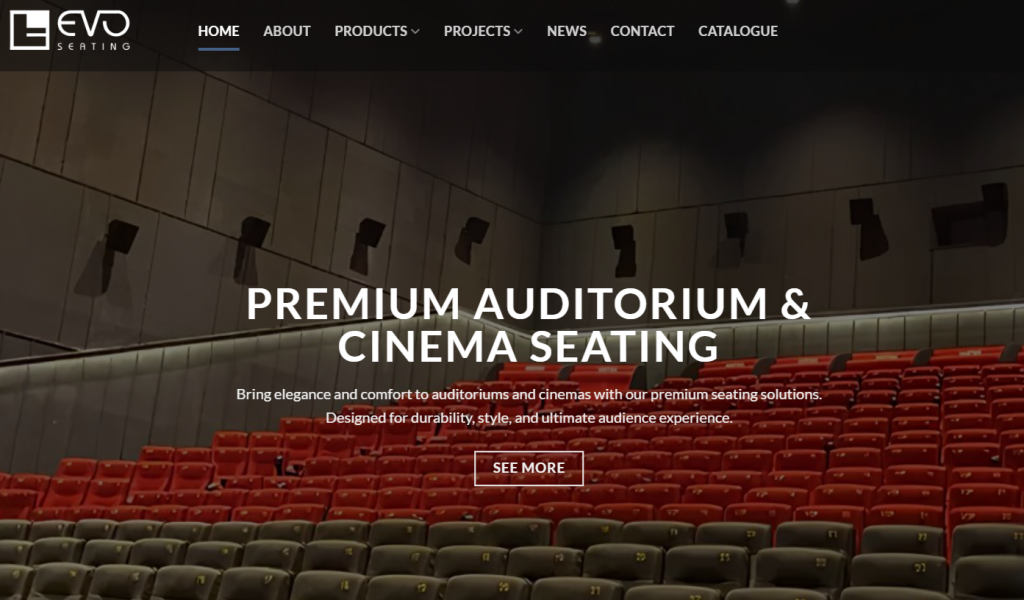
5. EVOSEATING
EVOSEATING specializes in versatile solutions, particularly for venues that require both fixed and retractable seating systems. They focus on the mechanics of the “tip-up” action to ensure quiet operation.
Key Features and Pros:
- Silent Gravity Lift: Mechanisms are engineered for noise reduction, crucial for recording environments.
- Compact Footprint: Excellent for venues with narrow row spacing.
Use Cases:
Multi-purpose community centers and school halls.
6. Leadsun Seating
Leadsun Seating targets the entry-level market by offering standardized designs that prioritize functional utility over custom aesthetics. This allows for some of the lowest price-per-seat metrics in the industry.
Key Features and Pros:
- Standardized Production: Reduced lead times through the use of stock components.
- Reliable Basics: Focuses on the core requirements of auditorium seating without expensive add-ons.
Use Cases:
Small community theaters and rural school districts.
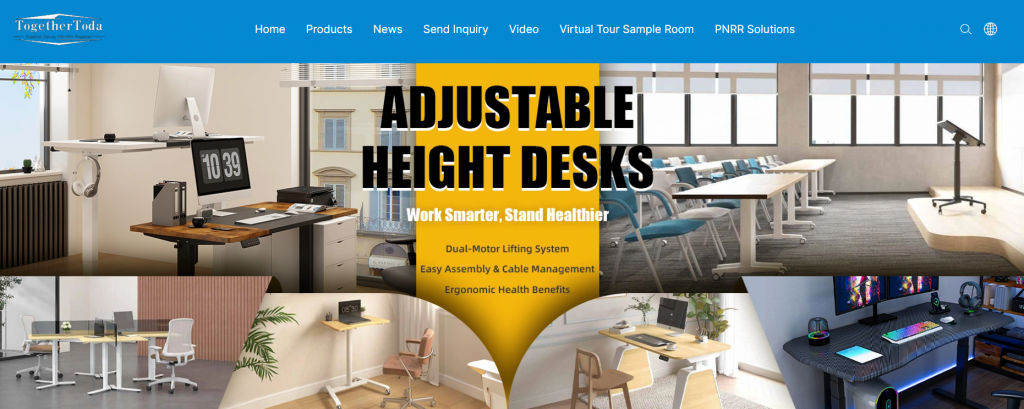
7. Toda Furniture
Toda Furniture bridges the gap between educational furniture and auditorium seating. They are particularly known for their integrated tablet arms and power connectivity options.
Key Features and Pros:
- Integrated Tech: Options for built-in charging ports and sturdy writing surfaces.
- Ergonomic Support: Designed for long periods of sitting during lectures.
Use Cases:
University lecture theaters and training facilities.
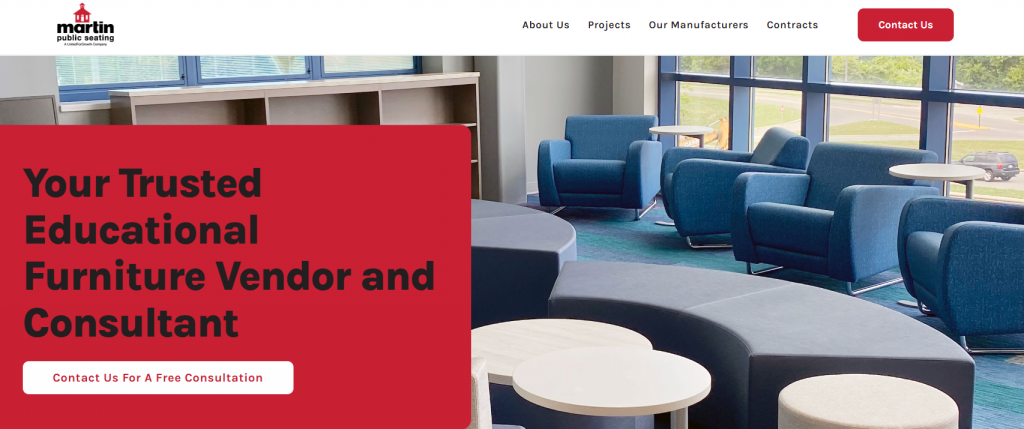
8. Martin Public Seating
This manufacturer focuses heavily on the institutional market, specifically schools and government buildings. Their products are designed to withstand the rigors of student use.
Key Features and Pros:
- Vandal Resistance: Use of high-impact materials that are difficult to scratch or damage.
- Simplified Maintenance: Easy-to-clean fabrics and surfaces.
Use Cases:
K-12 school auditoriums and public hearing rooms.
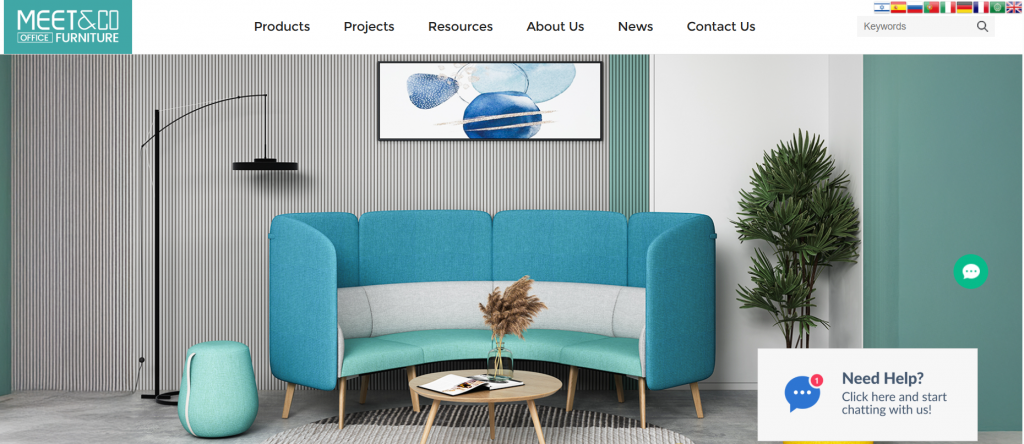
9. Meet&Co Furniture
Meet&Co is a broad commercial furniture provider that offers a specific line of public seating. They are a strong choice for projects that require a mix of office furniture and auditorium seating from a single vendor.
Key Features and Pros:
- One-Stop Sourcing: Can provide seating for the lobby, offices, and the main hall.
- Modern Aesthetics: Clean lines that suit contemporary corporate environments.
Use Cases:
Corporate headquarters and private training centers.
How to Choose: A Buying Guide for Cost-Effective Seating
When evaluating these manufacturers, price should not be the only variable. Consider the following criteria to ensure long-term value:
- Total Cost of Ownership (TCO): A cheaper seat that requires fabric replacement or spring repair after three years is more expensive than a durable seat that lasts fifteen.
- Vertical Integration: Manufacturers who control their own supply chain (like Leadcom) typically offer better quality control and lower prices because they don’t pay “middleman” margins on parts.
- Fire and Safety Compliance: Ensure the manufacturer provides certified test reports for the specific country of installation.
- Acoustics: In an auditorium, the seat acts as an acoustic baffle. The density of the foam and the perforations in the seat pan are critical for sound quality.
Understanding these technical requirements allows project managers to make an informed decision that balances the budget with the needs of the performers and audience.
Final Verdict
For 2026 projects, the “best” manufacturer depends heavily on the specific nature of the venue. For large-scale projects where budget efficiency and manufacturing scale are paramount, Leadcom Seating provides the most robust value due to their integrated production model. Those seeking high-end European design may find Seatorium or Skeie more aligned with their aesthetic goals, while Toda Furniture remains the preferred choice for tech-integrated educational environments.
FAQs
Q: Does “cost-effective” mean lower quality?
Not necessarily. In the seating industry, cost-effectiveness often comes from manufacturing efficiency, such as vertical integration or high-volume production, rather than using inferior materials.
Q: How does the seating affect the acoustics of the room?
Seating materials (fabric vs. plastic) and the density of the foam absorb sound. Leading manufacturers design their seats to mimic the sound absorption of a human body so the room’s acoustics remain consistent whether the auditorium is full or empty.
Q: What is the typical lead time for an auditorium seating project?
Lead times generally range from 8 to 14 weeks depending on the level of customization and the manufacturer’s location. Global manufacturers with large capacities can often shorten this window through optimized logistics.
